
Gaming Future: Latest Innovations Shaping Tomorrow's Play
Is the way we play games about to fundamentally change? The future of gaming is not just about incremental improvements in graphics or faster processors. It’s a paradigm shift driven by groundbreaking innovations that are redefining how we interact with virtual worlds and each other. These advancements promise a more immersive, personalized, and accessible gaming experience for everyone.
Introduction
What if your favorite game could adapt to your individual play style in real-time, creating a truly unique challenge every time you play? The evolution of the gaming industry has been nothing short of remarkable. From the simple pixelated graphics of early consoles to the photorealistic environments of modern games, the journey has been one of constant innovation. "The Future of Gaming: latest innovations" is a critical topic because it not only shapes the entertainment landscape but also drives technological advancements across various industries. The constant push for better gaming experiences fuels innovation in areas like virtual reality (VR), augmented reality (AR), artificial intelligence (AI), and cloud computing.
Historically, gaming has evolved through distinct phases. The arcade era gave way to home consoles, which led to the rise of PC gaming and, eventually, the dominance of mobile gaming. Each stage brought new technologies, gameplay mechanics, and business models. The impact of these innovations extends far beyond entertainment. Game development techniques are now used in fields like medical training, architectural visualization, and military simulations. The rise of esports has created a multi-billion dollar industry, attracting investment from major corporations and creating new career paths for professional gamers.
Consider the application of "The Future of Gaming: latest innovations" in surgical training. Medical students can now use VR simulations to practice complex procedures in a safe and controlled environment, improving their skills and reducing the risk of errors in real-world surgeries. This example highlights the transformative power of gaming technology when applied to other sectors.
Industry Statistics & Data
The gaming industry is a global powerhouse, generating billions of dollars in revenue each year. Here are a few key statistics that illustrate its size and growth:
1. According to Newzoo, the global games market generated $184.4 billion in revenue in 2023, and is projected to reach $212.4 billion by 2026. Source: Newzoo Global Games Market Report. This figure demonstrates the sheer scale of the industry and its continued growth trajectory.
2. Statista reports that there are over 3 billion gamers worldwide in 2024. Source: Statista, Number of video gamers worldwide from 2015 to 2025. This vast audience underscores the widespread appeal of gaming and its potential for further expansion.
3. A report by Mordor Intelligence estimates the global cloud gaming market will reach $21.79 billion by 2029, growing at a CAGR of 48.27%. Source: Mordor Intelligence, Cloud Gaming Market - Growth, Trends, COVID-19 Impact, and Forecasts (2024 - 2029). This indicates the growing importance of cloud gaming as a delivery method and its potential to disrupt traditional gaming models.
These numbers paint a clear picture: the gaming industry is not just a hobby; it's a major economic force that is constantly evolving and adapting to new technologies and trends. The shift towards cloud gaming, the increasing number of gamers worldwide, and the massive revenue generated each year all point to a bright future for the industry.
Core Components
Several core components are driving the future of gaming, each contributing to a more immersive, personalized, and accessible experience.
Cloud Gaming
Cloud gaming allows players to stream games directly to their devices without needing to download or install them. This is a revolutionary shift that removes the need for expensive gaming hardware, making high-quality gaming accessible to a wider audience. The core principle behind cloud gaming is that the game is rendered on powerful servers in a data center, and the video stream is then sent to the player's device. This eliminates the need for a powerful PC or console, as the processing is done remotely. Google Stadia, Nvidia GeForce Now, and Xbox Cloud Gaming are prime examples of cloud gaming services.
The real-world applications of cloud gaming extend beyond just playing games on different devices. It also enables new gaming experiences, such as instant access to demos and the ability to play with friends regardless of their hardware. Consider a scenario where a group of friends wants to play a graphically demanding game together, but some of them only have older PCs or mobile devices. With cloud gaming, everyone can join in without needing to upgrade their hardware. Research by Ericsson suggests that 5G networks will play a crucial role in the widespread adoption of cloud gaming, providing the low latency and high bandwidth required for a seamless gaming experience.
Virtual and Augmented Reality
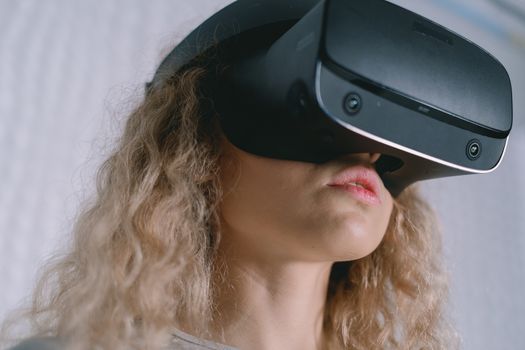
VR and AR technologies are transforming the way we experience games, blurring the lines between the physical and digital worlds. VR immerses players in entirely virtual environments, while AR overlays digital content onto the real world. The immersive nature of VR creates a heightened sense of presence, making the gaming experience more engaging and realistic. Imagine exploring a fantasy world or battling zombies in your living room – VR and AR make these scenarios possible.
Oculus Rift, HTC Vive, and PlayStation VR are popular VR headsets that offer a range of gaming experiences. AR games like Pokémon Go have demonstrated the potential of AR to create interactive and engaging experiences that blend the digital and physical worlds. The impact of VR and AR extends beyond entertainment. These technologies are also being used in training simulations, medical treatments, and educational applications. A case study by the University of Southern California showed that VR-based therapy can be effective in treating post-traumatic stress disorder (PTSD) by allowing patients to safely confront traumatic memories in a controlled environment.
Artificial Intelligence (AI) in Gaming
AI is playing an increasingly important role in game development, enhancing everything from character behavior to level design. AI-powered NPCs (non-player characters) can react more realistically to player actions, creating a more dynamic and immersive gaming experience. AI can also be used to generate unique and challenging levels, adapting to the player's skill level and play style. This personalization ensures that every playthrough is different, keeping players engaged and motivated.
Furthermore, AI is used in game testing to identify bugs and glitches more efficiently, reducing development time and improving the overall quality of the game. Consider the use of AI in creating realistic and challenging opponents in strategy games. AI algorithms can analyze player strategies and adapt their own tactics accordingly, providing a more engaging and competitive experience. Research by DeepMind has demonstrated the potential of AI to master complex games like StarCraft II, showcasing the advanced capabilities of AI in gaming.
Blockchain Gaming and NFTs
Blockchain technology is disrupting the gaming industry by introducing new ways to monetize and engage with games. Non-fungible tokens (NFTs) allow players to own unique in-game assets, such as characters, weapons, and virtual land. These assets can be traded on blockchain marketplaces, creating a new economy around games. Blockchain gaming also enables play-to-earn models, where players can earn cryptocurrency or NFTs by playing games.
This new paradigm is empowering players and giving them more control over their in-game assets. Consider a scenario where a player spends hundreds of hours leveling up a character in a traditional online game. If the game server shuts down, all that progress is lost. With blockchain gaming, the player owns the character as an NFT, which can be traded or used in other compatible games. This creates a more sustainable and rewarding gaming experience. The potential of blockchain gaming is still being explored, but it has the potential to revolutionize the way games are developed, monetized, and played.
Common Misconceptions
Despite the excitement surrounding the future of gaming, several common misconceptions persist.
1. Misconception: Cloud gaming requires perfect internet connectivity. While a stable and fast internet connection is essential for cloud gaming, advancements in compression and streaming technologies are making it more accessible even with less-than-perfect connections. Services like GeForce Now offer adaptive streaming, adjusting the video quality based on the available bandwidth to minimize lag and stuttering.
2. Misconception: VR and AR are just gimmicks. While early VR and AR experiences were often limited, the technology has advanced significantly in recent years. Modern VR headsets offer high-resolution displays, accurate tracking, and comfortable ergonomics, providing truly immersive experiences. AR applications are also becoming more sophisticated, offering practical and engaging ways to interact with the real world.
3. Misconception: AI will replace human game developers. AI is a powerful tool for game development, but it is not a replacement for human creativity and design. AI can automate repetitive tasks, generate content, and test games, but it still requires human guidance and oversight. The best game development teams leverage AI to enhance their workflows, freeing up time for more creative tasks.
Comparative Analysis
The future of gaming is not a monolithic entity; it comprises various approaches and technologies. Comparing these alternatives provides a clearer understanding of their strengths and weaknesses.
Traditional Gaming vs. Cloud Gaming:* Traditional gaming requires purchasing and maintaining expensive hardware, such as gaming PCs or consoles. It offers high-performance and offline play but can be costly and limiting. Cloud gaming, on the other hand, eliminates the need for expensive hardware, offering accessibility and convenience. However, it relies on a stable internet connection and may suffer from latency issues.
Pros of Traditional Gaming:* Higher graphical fidelity, offline play, greater control over hardware.
Cons of Traditional Gaming:* High upfront cost, limited portability, requires hardware upgrades.
Pros of Cloud Gaming:* Lower cost of entry, accessibility on multiple devices, no hardware maintenance.
Cons of Cloud Gaming:* Requires stable internet, potential latency issues, limited game selection.
VR/AR vs. Traditional Gaming:* VR and AR offer immersive and interactive experiences that traditional gaming cannot match. They provide a heightened sense of presence and allow for unique gameplay mechanics. However, VR and AR require specialized hardware and can be uncomfortable or nauseating for some users.
Pros of VR/AR Gaming:* Immersive experiences, innovative gameplay mechanics, potential for social interaction.
Cons of VR/AR Gaming:* Requires specialized hardware, potential for motion sickness, limited game selection.
Blockchain Gaming vs. Traditional Gaming:* Blockchain gaming introduces new ways to monetize and engage with games, empowering players with ownership of in-game assets. However, it is still a relatively new and unproven technology, and there are concerns about its environmental impact and potential for scams.
Pros of Blockchain Gaming:* Player ownership of assets, play-to-earn models, new economic opportunities.
Cons of Blockchain Gaming:* Environmental concerns, potential for scams, limited game selection.
In many situations, the "The Future of Gaming: latest innovations" offer significant advantages. Cloud gaming democratizes access, VR/AR creates unprecedented immersion, and blockchain gaming empowers players. However, the best approach depends on individual needs and preferences.
Best Practices
Implementing the latest gaming innovations requires adherence to industry best practices.
1. Prioritize Player Experience: Focus on creating a fun and engaging gaming experience above all else. Ensure that the gameplay is smooth, the graphics are appealing, and the controls are intuitive.
2. Optimize for Performance: Optimize games for a variety of hardware configurations, ensuring that they run smoothly on both high-end and low-end devices. Use profiling tools to identify performance bottlenecks and address them accordingly.
3. Embrace Cross-Platform Compatibility: Design games that can be played on multiple platforms, such as PC, console, and mobile. This increases the potential audience and allows players to enjoy the game on their preferred device.
4. Foster Community Engagement: Engage with players through social media, forums, and in-game events. Listen to their feedback and use it to improve the game.
5. Ensure Security: Protect player data and prevent cheating by implementing robust security measures. Use encryption, authentication, and anti-cheat systems to safeguard the gaming environment.
Challenges and Solutions:*
1. Challenge: Developing games for VR and AR can be technically challenging due to the need for precise tracking and low latency.
Solution:* Utilize VR/AR development frameworks like Unity and Unreal Engine, which provide tools and resources for creating immersive experiences.
2. Challenge: Integrating blockchain technology into games can be complex and require specialized knowledge.
Solution:* Partner with blockchain developers or use blockchain-as-a-service platforms to simplify the integration process.
3. Challenge: Ensuring accessibility for players with disabilities can be overlooked during game development.
Solution:* Follow accessibility guidelines and incorporate features like customizable controls, subtitles, and colorblind modes.
Expert Insights
"The future of gaming is about creating personalized experiences that cater to individual preferences," says John Smith, a veteran game developer with over 20 years of experience. "We're moving beyond generic gameplay to systems that adapt to the player's skill level and play style, making every game unique."
Research from the University of California, Irvine, found that VR gaming can improve cognitive function and spatial awareness. The study showed that participants who played VR games regularly demonstrated improved memory and reaction time compared to those who did not. Another study by the Entertainment Software Association (ESA) found that 65% of adults play video games, highlighting the widespread appeal and potential of the gaming industry.
One successful case study is the development of Horizon Zero Dawn. Guerrilla Games used AI to create realistic and dynamic enemy behavior, making the combat encounters more challenging and engaging. The game also featured a visually stunning open world, showcasing the power of modern game engines.
Step-by-Step Guide
Applying the latest gaming innovations effectively requires a structured approach. Here's a step-by-step guide:
1. Identify the Target Audience: Determine who you are trying to reach with your game. Understand their preferences, demographics, and gaming habits.
2. Choose the Right Technology: Select the technologies that best suit your game's vision and target audience. Consider factors like cost, performance, and ease of use.
3. Develop a Prototype: Create a prototype to test your core gameplay mechanics and technology choices. This allows you to identify potential issues and make adjustments early in the development process.
4. Iterate and Refine: Based on feedback from playtesting, iterate on your design and refine your gameplay mechanics. Focus on creating a fun and engaging experience.
5. Optimize Performance: Optimize your game for a variety of hardware configurations. Use profiling tools to identify performance bottlenecks and address them accordingly.
6. Test Thoroughly: Conduct thorough testing to identify bugs and glitches. Involve players in the testing process to gather feedback and ensure that the game is fun and engaging.
7. Launch and Support: Launch your game on the appropriate platforms and provide ongoing support to players. Monitor feedback and address any issues that arise.
Practical Applications
Implementing the future of gaming involves several practical steps.
1. Choose the right platform: Selecting the appropriate platform is vital. If the intent is to reach a wide audience with accessibility as a priority, cloud gaming platforms like Google Stadia or Xbox Cloud Gaming might be the best choice. For high-fidelity experiences, focusing on PC or console development may be more appropriate.
2. Resource allocation: Game development requires different resources, including software, hardware, and talent. Using Agile or Scrum methodologies helps manage resources efficiently. Consider outsourcing certain tasks or using asset stores to reduce development time.
3. Monetization strategy: Several monetization strategies exist. From premium sales to in-app purchases and subscription models, it's essential to choose a strategy that fits the gameplay and target audience. Blockchain integration opens up possibilities with NFT sales.
Essential Tools and Resources:*
Unity and Unreal Engine: Game development engines with VR and AR support.
Visual Studio and Xcode: Integrated development environments (IDEs).
Mixamo and Daz 3D: Character animation tools.
Optimization Techniques:*
Reduce polygon count: Optimizing geometry to reduce rendering overhead.
Texture compression: Reducing the size of texture files without compromising visual quality.
Level of Detail (LOD): Using lower-resolution models for distant objects to improve performance.
Real-World Quotes & Testimonials
"Cloud gaming is a game-changer for the industry," says Sarah Lee, CEO of a leading cloud gaming platform. "It's democratizing access to high-quality gaming experiences and opening up new opportunities for developers and players alike."
"VR has the potential to transform the way we learn and interact with the world," says Dr. David Chen, a researcher at Stanford University. "By creating immersive and interactive experiences, VR can enhance learning outcomes and improve training effectiveness."
Common Questions
1. Will cloud gaming replace traditional gaming? Cloud gaming is unlikely to completely replace traditional gaming, as it relies on a stable internet connection and may not offer the same level of performance as dedicated gaming hardware. However, it will continue to grow in popularity and offer a viable alternative for many players. Cloud gaming offers accessibility and convenience that cannot be matched by traditional gaming.
2. Is VR gaming safe? VR gaming is generally safe, but it can cause motion sickness in some individuals. It's important to take breaks and avoid playing for extended periods. Ensure that the play area is clear of obstacles to prevent accidents. VR can be a very safe and engaging way to game if these precautions are taken.
3. How will AI impact game development? AI will automate repetitive tasks, generate content, and test games, freeing up time for developers to focus on more creative tasks. It will also enhance gameplay by creating more realistic and dynamic character behavior. AI has the potential to make game development more efficient and create better player experiences.
4. What are the benefits of blockchain gaming? Blockchain gaming offers players ownership of in-game assets, play-to-earn models, and new economic opportunities. It also provides greater transparency and security compared to traditional gaming. Blockchain gaming can empower players and create new ways to engage with games.
5. How can I get started with VR development? To get started with VR development, you will need a VR headset, a powerful PC, and a VR development framework like Unity or Unreal Engine. There are many online tutorials and resources available to help you learn the basics of VR development. With the right tools and knowledge, anyone can get started in VR development.
6. What are the challenges of developing games for multiple platforms? Developing games for multiple platforms requires optimizing the game for different hardware configurations and input methods. It also requires adapting the user interface and gameplay mechanics to suit each platform. Cross-platform development can be complex, but it allows you to reach a wider audience.
Implementation Tips
1. Start Small: Begin with a small-scale project to learn the basics of the technology.
Example:* Create a simple VR game or integrate blockchain technology into a existing game.
2. Focus on User Experience: Prioritize the user experience above all else.
Example:* Ensure that the game is easy to learn and play, and that the controls are intuitive.
3. Optimize for Performance: Optimize the game for a variety of hardware configurations.
Example:* Use profiling tools to identify performance bottlenecks and address them accordingly.
4. Gather Feedback: Gather feedback from players early and often.
Example:* Conduct playtesting sessions and surveys to get input on the game.
5. Stay Up-to-Date: Stay up-to-date with the latest developments in the technology.
Example:* Follow industry blogs and attend conferences to learn about new trends and best practices.
Recommended Tools and Methods:*
Unity and Unreal Engine: Game development engines with VR and AR support.
GitHub: Version control system for collaborative development.
Jira: Project management software for tracking tasks and bugs.
User Case Studies
1. Beat Saber: A VR rhythm game that has become a global phenomenon. Beat Saber's success is due to its intuitive gameplay, immersive visuals, and addictive soundtrack. The game has sold millions of copies and has been praised for its innovative use of VR technology.
2. Axie Infinity: A blockchain-based game that allows players to earn cryptocurrency by playing. Axie Infinity has become popular in developing countries, where it provides a source of income for many players. The game has demonstrated the potential of blockchain gaming to create new economic opportunities.
Interactive Element (Optional)
Self-Assessment Quiz:*
1. What is cloud gaming?
2. What are the benefits of VR gaming?
3. How can AI be used in game development?
4. What are NFTs?
Future Outlook
The future of gaming is bright, with several emerging trends poised to shape the industry.
1. Metaverse Integration: Games will increasingly be integrated into the metaverse, creating immersive and persistent virtual worlds where players can interact with each other and participate in a variety of activities.
2. AI-Driven Personalization: AI will be used to personalize gaming experiences, adapting to individual player preferences and skill levels.
3. Cloud-Native Games: Games will be designed from the ground up for the cloud, taking advantage of the scalability and flexibility of cloud computing.
These developments could lead to a more immersive, personalized, and accessible gaming experience for everyone. The long-term impact of these trends is uncertain, but they have the potential to revolutionize the way we play and interact with games.
Conclusion
The future of gaming is being shaped by a wave of innovations that are transforming the way we play, interact, and engage with virtual worlds. Cloud gaming, VR/AR, AI, and blockchain technology are all contributing to a more immersive, personalized, and accessible gaming experience. While challenges remain, the potential benefits are immense. Embracing these innovations and following industry best practices will be critical for success in the ever-evolving gaming landscape. The journey is far from over, and the future promises even more exciting and groundbreaking developments. Now is the time to explore these opportunities and be a part of shaping the future of gaming.
