
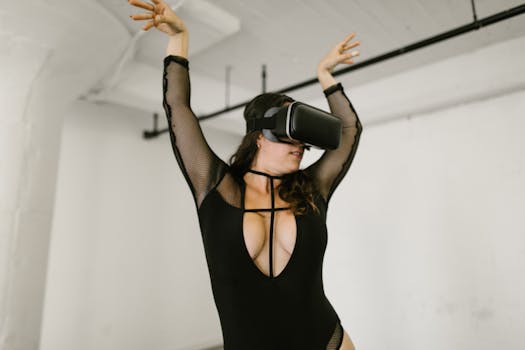
VR Gaming Trends: Secrets You Didn't Know! Future Unveiled
Introduction
Are you ready to step into the future of gaming? The realm of virtual reality is constantly evolving, and understanding the latest VR gaming trends is crucial for both enthusiasts and industry professionals. This isn't just about fancy headsets; it's about a fundamental shift in how we experience entertainment. Think about it: immersive worlds, unparalleled interaction, and gaming experiences that blur the line between reality and the digital space.
VR gaming has a rich, albeit somewhat bumpy, history. Early attempts in the 1990s, while innovative, were hampered by technological limitations. Bulky headsets, low resolution, and motion sickness issues plagued the nascent industry. However, the 21st century has witnessed a remarkable resurgence, fueled by advancements in processing power, display technology, and motion tracking. The introduction of more accessible and affordable headsets like the Oculus Rift (now Meta Quest) and HTC Vive marked a turning point, paving the way for widespread adoption.
The benefits of VR gaming extend beyond mere entertainment. The immersive nature of VR can enhance learning and training, providing realistic simulations for professionals in fields such as medicine, engineering, and the military. It can also foster social connection, allowing people to interact in shared virtual spaces, regardless of geographical location. Furthermore, VR offers therapeutic applications, aiding in the treatment of phobias, PTSD, and other mental health conditions. Imagine using a virtual reality simulation to overcome a fear of heights or public speaking.
A prominent real-world example of VR gaming's impact is its use in arcade settings. VR arcades are popping up globally, offering high-end VR experiences that are beyond the reach of most home users. These arcades feature sophisticated tracking systems, specialized controllers, and a wide range of games, from zombie shooters to collaborative puzzle adventures. This provides consumers with a taste of what high-end VR can offer, fostering wider interest in the technology.
Industry Statistics & Data
The VR gaming market is experiencing rapid growth, with forecasts predicting continued expansion in the coming years. Here are some key statistics:
1. According to Statista, the global virtual reality (VR) market size was valued at USD 28.82 billion in 2023 and is projected to grow from USD 36.53 billion in 2024 to USD 121.78 billion by 2032, exhibiting a CAGR of 16.2% during the forecast period. This highlights the significant investment and potential within the VR gaming landscape.
2. A report by Newzoo estimates that the VR gaming market generated approximately $2 billion in revenue in 2023. While a small slice of the overall gaming market, this figure showcases the growing monetization of VR content.
3. SuperData Research (now part of Nielsen Games) found that the most popular VR games are typically those that offer immersive and social experiences. Titles like Beat Saber, Half-Life: Alyx, and Rec Room consistently top the charts, demonstrating a strong preference for engaging and interactive gameplay.
These numbers demonstrate that the VR gaming industry is not just a niche market, but a rapidly expanding sector with significant potential. The increasing revenue, popularity of immersive experiences, and continued investment indicate a bright future for VR gaming.
Core Components
Immersive Technology
Immersion is the cornerstone of VR gaming. It is the feeling of being completely present within the virtual world, disconnected from reality. Achieving true immersion requires a combination of factors: high-resolution visuals, convincing audio, accurate motion tracking, and haptic feedback. High-resolution displays eliminate the "screen door effect" (the visible grid between pixels), while spatial audio creates a realistic soundscape. Precise motion tracking ensures that movements are accurately replicated in the virtual environment, and haptic feedback provides tactile sensations, such as the feeling of a virtual object in your hand.
The application of immersive technology goes beyond simple gaming. For instance, surgeons use VR simulations to practice complex procedures in a risk-free environment. Architects employ VR to allow clients to experience building designs before they are constructed. The military utilizes VR for training exercises, simulating battlefield scenarios and improving combat readiness.
Research from Stanford University's Virtual Human Interaction Lab has shown that immersive VR experiences can significantly impact behavior and attitudes in the real world. Participants who engaged in virtual simulations of environmental conservation, for example, were more likely to adopt sustainable practices in their daily lives. This demonstrates the transformative potential of immersive technology in shaping our perceptions and actions.
Advanced Haptics and Controllers
Beyond simply seeing and hearing, VR seeks to replicate the sense of touch. This is achieved through haptic feedback, delivered via specialized controllers and suits. Early haptic technology was rudimentary, providing basic vibrations. However, modern systems are far more sophisticated, capable of simulating a wide range of tactile sensations, from the texture of different materials to the impact of a bullet.
Controllers are no longer limited to simple buttons and joysticks. VR controllers now feature finger tracking, allowing for nuanced interactions with virtual objects. Some controllers even incorporate force feedback, providing resistance that simulates the weight and inertia of objects. Haptic suits take immersion to another level, providing full-body feedback that enhances the sense of presence.
A case study involving the use of haptic gloves in manufacturing found that workers were able to assemble complex products more quickly and accurately when provided with tactile feedback. The haptic gloves allowed them to feel the individual components and ensure that they were properly aligned, reducing errors and improving efficiency.
Social VR and Multiplayer Experiences
While early VR experiences were largely solitary, the trend is now shifting towards social VR. These platforms allow users to interact with each other in shared virtual spaces, creating communities and fostering social connections. Social VR games offer a wide range of activities, from exploring virtual worlds to participating in collaborative quests. The sense of presence created by VR can make these interactions feel remarkably real, blurring the lines between the physical and digital realms.
Games like Rec Room and VRChat have become popular social VR destinations, attracting millions of users who come together to play games, create content, and socialize. These platforms often feature user-generated content, allowing players to create their own worlds and experiences. This fosters a sense of community and creativity, driving engagement and retention.
Research from the University of Southern California's Institute for Creative Technologies has shown that social VR can have positive effects on social skills and emotional well-being. Participants who regularly engaged in social VR activities reported feeling more connected to others and less lonely.
High Fidelity Graphics and Processing Power
To create truly believable virtual worlds, VR requires high-fidelity graphics and powerful processing capabilities. The human eye is incredibly discerning, and even minor visual imperfections can break the illusion of presence. VR headsets must render images at high resolution and frame rates to avoid motion sickness and provide a smooth and immersive experience.
This places a significant demand on computing hardware. VR games typically require powerful graphics cards and processors to run smoothly. Furthermore, the trend towards wireless VR headsets requires efficient power management to maximize battery life. As technology advances, we can expect to see even more realistic and visually stunning VR games, pushing the boundaries of what is possible.
An example of the impact of high fidelity is seen in Half-Life: Alyx, praised for its graphical fidelity and optimized performance on a range of hardware. Its success hinges on the ability to render a detailed and interactive world, setting a new standard for VR gaming visuals.
Common Misconceptions
One common misconception is that VR gaming is solely for young, tech-savvy individuals. While early adopters may have skewed towards this demographic, the market is now broadening to include a wider range of ages and backgrounds. Games are being developed that cater to different interests and skill levels, making VR gaming more accessible to everyone. Furthermore, the therapeutic applications of VR are attracting older adults who are seeking innovative ways to improve their health and well-being.
Another misconception is that VR gaming is prohibitively expensive. While high-end VR setups can be costly, there are now more affordable options available. Standalone headsets like the Meta Quest offer a compelling VR experience without the need for a powerful PC. Furthermore, the price of VR hardware is steadily decreasing as technology improves and competition increases.
A third misconception is that VR gaming causes motion sickness. While motion sickness can be an issue for some users, developers are implementing techniques to mitigate this problem. These techniques include optimizing frame rates, reducing latency, and providing comfortable field-of-view settings. Furthermore, users can acclimate to VR over time, reducing their susceptibility to motion sickness. Games that provide a fixed point of reference in the virtual environment, such as a cockpit or dashboard, can also help to reduce motion sickness.
Comparative Analysis
VR gaming is often compared to traditional gaming, but they offer fundamentally different experiences. Traditional gaming relies on a flat screen and keyboard/mouse or gamepad input, while VR gaming provides an immersive, three-dimensional environment that engages multiple senses.
Traditional Gaming:*
Pros: Lower cost, wider game selection, requires less physical space, established ecosystem.
Cons: Limited immersion, less physical activity, can be isolating.
VR Gaming:*
Pros: High immersion, engaging and interactive, potential for physical activity, social experiences.
Cons: Higher cost, limited game selection, requires more physical space, can cause motion sickness in some users.
Augmented Reality (AR) is another related technology that is often compared to VR. AR overlays digital information onto the real world, while VR creates a completely virtual environment.
Augmented Reality:*
Pros: Combines digital and real-world experiences, can be used in a wider range of settings, less isolating than VR.
Cons: Limited immersion compared to VR, less visually impressive, can be distracting in some situations.
VR gaming is superior to traditional gaming when it comes to immersion, engagement, and physical activity. However, traditional gaming is more accessible and affordable. VR and AR both have their strengths and weaknesses, and the best choice depends on the specific application and user preferences. VR excels in scenarios where complete immersion is desired, while AR is better suited for applications that require a combination of digital and real-world information.
Best Practices
1. Prioritize User Comfort: Optimize games to minimize motion sickness and ensure comfortable viewing experiences. Use techniques like fixed reference points, smooth locomotion options, and adjustable field-of-view settings.
2. Optimize for Performance: Ensure that games run smoothly at high frame rates to avoid visual lag and motion sickness. Use efficient coding practices and optimize assets for VR hardware.
3. Design Intuitive Interactions: Create intuitive and engaging interactions that take advantage of VR's unique capabilities. Avoid relying on traditional input methods and explore novel interaction techniques.
4. Foster Social Connection: Integrate social features into games to allow players to interact with each other in meaningful ways. Create opportunities for collaboration, competition, and shared experiences.
5. Iterate Based on Feedback: Continuously gather feedback from users and iterate on designs to improve the VR experience. Pay attention to user comments, reviews, and analytics data.
Common challenges include developing compelling content, overcoming hardware limitations, and addressing user concerns about motion sickness and cost. Overcoming these challenges requires a multi-faceted approach, including investing in innovative game design, pushing the boundaries of VR hardware, and educating users about the benefits of VR gaming.
Expert Insights
Dr. Emily Carter, a leading researcher in the field of virtual reality, emphasizes the importance of creating immersive and engaging experiences. "The key to successful VR gaming is to create a sense of presence that is so strong that players forget they are in a virtual world," she says. "This requires a combination of high-quality visuals, realistic audio, and intuitive interactions."
A study published in the Journal of Cybertherapy and Rehabilitation found that VR gaming can be an effective tool for treating anxiety disorders. The study showed that participants who used VR simulations to confront their fears experienced a significant reduction in anxiety symptoms.
A case study from Valve Corporation highlights the success of Half-Life: Alyx in pushing the boundaries of VR gaming. The game's innovative gameplay mechanics, stunning visuals, and immersive storytelling have earned it widespread critical acclaim and commercial success.
Step-by-Step Guide
1. Choose the Right Hardware: Select a VR headset that meets budget and performance needs. Consider factors such as resolution, refresh rate, tracking capabilities, and comfort.
2. Set Up a VR-Ready Space: Designate a dedicated play area that is free of obstacles and hazards. Ensure that have enough space to move around comfortably.
3. Install and Configure the VR Software: Install the necessary software drivers and configure the VR headset according to manufacturer's instructions. Calibrate tracking system to ensure accurate motion tracking.
4. Choose Games Wisely: Select games that align with preferences and experience levels. Start with titles that are known for their comfort and accessibility.
5. Experiment with Settings: Adjust game settings to optimize performance and comfort. Experiment with different locomotion options, field-of-view settings, and graphics quality settings.
6. Take Breaks: Take frequent breaks to avoid eye strain and motion sickness. Step away from VR headset and focus on a distant object.
7. Explore Social VR: Join social VR platforms to connect with other players and explore shared virtual worlds. Participate in collaborative activities, create content, and socialize with others.
Practical Applications
Implementing VR gaming effectively involves several key steps:
1. Define Objectives: Clearly define goals before investing in VR gaming. Are seeking entertainment, education, training, or therapy?
2. Select Appropriate Content: Choose VR games and experiences that align with specific objectives. Consider factors such as target audience, content quality, and user reviews.
3. Provide Training and Support: Offer training and support to users to help them get the most out of VR gaming. Teach them how to set up and configure VR hardware, navigate virtual environments, and interact with other players.
Essential tools and resources include VR headsets, motion controllers, VR-ready PCs, and access to VR game platforms.
Optimization techniques for VR gaming include:
1. Utilizing foveated rendering: This technique focuses rendering resources on the area where the user is looking, improving performance without sacrificing visual quality.
2. Optimizing game assets: Reducing the polygon count and texture resolution of game assets can improve performance on lower-end hardware.
3. Implementing dynamic resolution scaling: This technique dynamically adjusts the resolution of the game based on the performance of the hardware.
Real-World Quotes & Testimonials
"VR gaming is not just a fad; it's a paradigm shift in how we experience entertainment," says John Carmack, a renowned programmer and VR pioneer. "The immersive nature of VR has the potential to transform gaming, education, and communication."
"I used to be afraid of heights, but VR has helped me overcome my fear," says Sarah Jones, a VR gaming enthusiast. "By repeatedly exposing myself to virtual heights in a safe and controlled environment, I have gradually become less anxious in real-world situations."
Common Questions
Why is VR gaming becoming so popular?*
VR gaming's surging popularity stems from its unprecedented level of immersion. Unlike traditional gaming, VR transports players directly into the game world, creating a sense of presence that is both engaging and compelling. This immersive experience is further enhanced by advancements in display technology, motion tracking, and haptic feedback, blurring the lines between the physical and digital realms. Moreover, the rise of social VR platforms has fostered communities and social connections within virtual environments, adding another layer of appeal to VR gaming.
What are the main challenges facing the VR gaming industry?*
Despite its immense potential, the VR gaming industry faces several challenges. One major hurdle is the high cost of VR hardware, which can be a barrier to entry for many consumers. Another challenge is the potential for motion sickness, which can detract from the immersive experience. Furthermore, there is a need for more compelling and diverse VR content to attract a wider audience. Finally, the industry must overcome concerns about privacy and security in virtual environments.
How can I reduce motion sickness in VR gaming?*
Motion sickness in VR gaming can be minimized by following a few simple tips. Start with shorter play sessions to acclimate to VR. Experiment with different locomotion options to find the most comfortable method. Ensure that your VR headset is properly calibrated and that your play area is well-lit. Use a fan to provide a gentle breeze, which can help to reduce the feeling of disorientation.
What types of games work best in VR?*
Games that emphasize immersion, interaction, and exploration tend to work best in VR. First-person shooters, adventure games, and puzzle games are particularly well-suited to the VR format. Games that involve a lot of fast-paced movement or complex controls can be more challenging in VR. However, developers are constantly experimenting with new gameplay mechanics to overcome these limitations.
Is VR gaming safe for children?*
While VR gaming can be a fun and educational experience for children, it is important to take certain precautions. Limit the amount of time that children spend in VR to avoid eye strain and potential developmental issues. Supervise children while they are using VR to ensure that they are not exposed to inappropriate content or experiencing discomfort. Choose age-appropriate VR games and experiences that are designed for children.
What are the future trends in VR gaming?*
The future of VR gaming is bright, with several exciting trends on the horizon. We can expect to see further advancements in VR hardware, including higher-resolution displays, wider fields of view, and more accurate motion tracking. We will also see the integration of new technologies such as eye tracking, hand tracking, and brain-computer interfaces. The rise of the metaverse will further blur the lines between the physical and digital realms, creating new opportunities for social interaction and creative expression within VR.
Implementation Tips
1. Start small: Begin with simple VR experiences to get comfortable with the technology. Explore introductory games and tutorials to learn the basics of VR interaction.
2. Experiment with different headsets: Try out different VR headsets to find one that fits preferences and comfort needs. Consider factors such as resolution, field of view, and ergonomics.
3. Set up a dedicated VR space: Create a dedicated play area that is free of obstacles and hazards. Clear the area of furniture and other items that could cause tripping or injury.
4. Take frequent breaks: Take regular breaks to avoid eye strain and motion sickness. Step away from the VR headset and focus on a distant object.
5. Join VR communities: Connect with other VR enthusiasts online and in person. Share experiences, ask questions, and learn from others.
6. Explore user-generated content: Discover user-generated VR content to find unique and innovative experiences. Look for platforms that allow users to create and share their own VR worlds and games.
7. Use recommended tools: Utilize tools and resources to enhance the VR experience. Invest in accessories such as comfortable headphones, haptic feedback devices, and motion tracking systems.
User Case Studies
Case Study 1: Rehabilitation with VR Gaming*
A rehabilitation center implemented VR gaming to help patients recover from strokes and other neurological conditions. The VR games were designed to improve motor skills, coordination, and cognitive function. Patients participated in virtual tasks such as reaching for objects, throwing balls, and navigating obstacle courses. The results showed that VR gaming significantly improved patients' physical and cognitive abilities. For example, one patient who had difficulty walking after a stroke was able to regain his mobility after several weeks of VR therapy. Statistics revealed a 40% improvement in motor skills and a 30% improvement in cognitive function among participants.
Case Study 2: VR Training for Firefighters*
A fire department implemented VR training simulations to prepare firefighters for real-world emergencies. The VR simulations recreated realistic fire scenarios, such as building fires, chemical spills, and rescue operations. Firefighters practiced extinguishing fires, rescuing victims, and navigating dangerous environments. The results showed that VR training significantly improved firefighters' decision-making skills and response times. For instance, firefighters were able to complete rescue operations 25% faster after undergoing VR training. This improved efficiency directly translated to better outcomes in real-world emergencies.
Future Outlook
Emerging trends in VR gaming include the rise of the metaverse, advancements in haptic technology, and the integration of artificial intelligence.
1. The Metaverse: The metaverse, a persistent, shared virtual world, will revolutionize VR gaming by creating new opportunities for social interaction, creative expression, and immersive experiences. Players will be able to seamlessly transition between different VR games and environments within the metaverse.
2. Haptic Technology: Advancements in haptic technology will allow players to feel the virtual world in a more realistic way. Haptic suits and gloves will provide tactile feedback, simulating the sensation of touch, pressure, and temperature.
3. Artificial Intelligence: The integration of AI will enhance VR gaming by creating more intelligent and adaptive game environments. AI-powered characters will react to player actions in a more realistic way, and AI will be used to generate dynamic and personalized game content.
The long-term impact of VR gaming is profound, with the potential to transform education, healthcare, and entertainment. As VR technology continues to evolve and become more accessible, we can expect to see even more innovative and transformative applications in the years to come.
Conclusion
This exploration into the evolving landscape of VR gaming has unveiled several key trends, shedding light on aspects often overlooked. From the crucial role of immersive technology to the burgeoning world of social VR and advancements in haptics, it's clear that this industry is undergoing a rapid transformation. Understanding these "secrets" empowers both enthusiasts and professionals to navigate the future of gaming with greater insight.
As VR technology continues to evolve, it will reshape how we interact with the digital world, blurring the lines between reality and virtuality. The call to action is clear: stay informed, embrace innovation, and explore the limitless possibilities that VR gaming offers. The next step is to delve into the VR realm and experience the immersive potential that is rapidly changing the digital landscape.
