
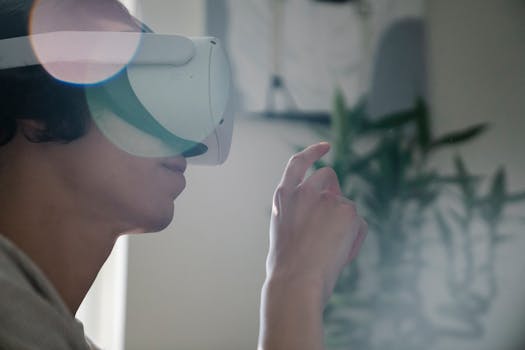
VR Gaming Trends: Beginner's Buying Guide [2024 Edition]
Are you ready to dive into the immersive world of VR gaming but feel overwhelmed by the sheer amount of information and available headsets? This comprehensive guide is your essential resource for navigating the latest VR gaming trends and making informed buying decisions.
Introduction
Is VR gaming the future of entertainment, or is it just a passing fad?* The truth is, VR gaming is rapidly evolving from a niche hobby into a mainstream form of entertainment. This beginner's guide aims to demystify the world of VR gaming, providing you with the knowledge necessary to understand current trends and make smart purchase decisions. Virtual reality (VR) gaming has been around for decades, with early prototypes emerging in the 1960s. However, these early systems were bulky, expensive, and lacked the processing power to deliver a truly immersive experience. The 1990s saw a resurgence of interest in VR, with companies like Sega and Nintendo attempting to enter the market. These attempts were ultimately unsuccessful due to technological limitations and high costs. The last decade has witnessed a technological revolution that has enabled the release of more affordable, high-performance VR headsets.
The benefit of VR gaming lies in its ability to provide an unprecedented level of immersion. Gamers can step inside the game world, interact with the environment, and experience gameplay in a way that traditional gaming cannot replicate. This immersive experience has the potential to revolutionize various industries, including entertainment, education, and healthcare. Consider the example of flight simulators used to train pilots. VR technology enhances these simulations by providing a realistic and immersive training environment, allowing pilots to practice complex maneuvers and emergency procedures in a safe and controlled setting.
Industry Statistics & Data
The VR gaming market is experiencing significant growth.
Stat 1: According to Statista, the global virtual reality (VR) market size was valued at USD 28.64 billion in 2023 and is projected to reach USD 81.31 billion by 2028.
Stat 2: A report by Newzoo estimates that the VR gaming market will generate $3.2 billion in revenue by 2024.
Stat 3: SuperData Research reported that over 5 million VR headsets were sold in 2020 alone, indicating a growing consumer adoption rate.
These numbers clearly show the burgeoning popularity and financial viability of the VR gaming sector. Increased investment in VR technology, coupled with growing consumer interest, is driving this expansion. The revenue projections indicate that VR gaming is not just a fad, but a sustainable and growing market segment within the broader gaming industry.
(insert comparison graph about VR headset sales vs traditional gaming console sales)
Core Components
VR gaming encompasses several core components that work together to create the immersive experience. Three essential aspects are: VR Headsets, VR-Ready PCs/Consoles, and VR Games/Applications.
VR Headsets
VR headsets are the primary hardware component of VR gaming, delivering visual and auditory stimuli to the user. Modern headsets feature high-resolution displays, wide fields of view, and integrated headphones. The Oculus Rift, HTC Vive, and PlayStation VR are popular examples. High-quality VR headsets boast features like high refresh rates (90Hz or higher) and low-persistence displays, which minimize motion blur and reduce the likelihood of motion sickness. These features are crucial for creating a comfortable and immersive VR experience.
VR headsets are used in medical simulations to allow surgeons to practice complex procedures in a controlled environment. This improves surgical skills and reduces the risk of errors during actual operations. In design and architecture, VR headsets are used to visualize 3D models of buildings and products, allowing designers and clients to experience designs in a realistic and immersive way before construction begins. Meta's Quest 3 and Apple's Vision Pro are also pushing VR into productivity and social platforms.
VR-Ready PCs/Consoles
Most high-end VR headsets require a powerful PC or console to run effectively. These devices must meet specific minimum specifications to ensure smooth frame rates and low latency, which are crucial for a comfortable VR experience. The graphics card is particularly important, as it is responsible for rendering the complex 3D environments that VR games demand. NVIDIA's GeForce RTX series and AMD's Radeon RX series are common choices for VR-ready PCs.
VR-ready PCs are used extensively in engineering design to create and test virtual prototypes of products. This allows engineers to identify potential problems and optimize designs before physical prototypes are built, saving time and money. Car manufacturers often use VR-ready PC and dedicated software to design and test new vehicle models. These virtual simulations allow designers to evaluate the vehicle's aesthetics, ergonomics, and safety features in a realistic environment.
VR Games/Applications
The availability of compelling VR games and applications is essential for driving the adoption of VR technology. A wide range of genres are available, including action, adventure, puzzle, and simulation games. Games like Beat Saber, Half-Life: Alyx, and Resident Evil 7 VR have been particularly successful, showcasing the potential of VR gaming.
VR games are used to create interactive educational experiences. Students can explore historical sites, dissect virtual animals, and conduct experiments in a safe and engaging environment. For example, medical students can use VR simulations to practice surgical procedures, while history students can explore ancient civilizations in a virtual museum. There are also fitness apps utilizing VR to provide fun and engaging workout environments, such as Supernatural and FitXR.
Common Misconceptions
There are several common misconceptions surrounding VR gaming that often deter potential users. Addressing these misconceptions is crucial for promoting a more accurate understanding of the technology and its potential.
Misconception 1: VR is too expensive.* While high-end VR setups can be costly, there are now more affordable options available. Standalone headsets like the Meta Quest 3 offer a compelling VR experience without requiring a powerful PC, making VR more accessible to a wider audience. Furthermore, prices for PC-based VR headsets have gradually decreased over time, making them more affordable as well.
Counter-evidence:* The release of the Meta Quest 2, at a price point significantly lower than previous VR headsets, led to a surge in VR adoption. This demonstrates that affordability is a key factor in driving consumer interest.
Misconception 2: VR causes motion sickness.* While motion sickness can be a problem for some users, it is not a universal experience. Modern VR headsets incorporate technologies that reduce motion sickness, such as low-persistence displays and high refresh rates. Additionally, developers are becoming more adept at designing VR games that minimize motion sickness by avoiding sudden movements and unnatural camera angles.
Counter-evidence:* Studies have shown that with proper acclimatization and the use of appropriate VR games, most users can overcome motion sickness. Many VR games also offer comfort settings that allow players to adjust the level of motion to their tolerance.
Misconception 3: VR gaming is isolating. While VR gaming is a solitary activity in some ways, it can also be a social experience. Many VR games offer multiplayer modes that allow players to interact with each other in virtual environments. Social VR platforms like VRChat and Rec Room* provide spaces for users to meet, socialize, and participate in various activities together.
Counter-evidence:* Social VR platforms have gained significant popularity, demonstrating that VR can be a social and engaging experience. These platforms allow users to create avatars, explore virtual worlds, and interact with other users from around the world.
Comparative Analysis
VR gaming is often compared to traditional gaming on consoles and PCs. While both offer engaging entertainment experiences, they differ significantly in terms of immersion, interactivity, and cost.
Traditional gaming provides a visually appealing experience on a flat screen, while VR gaming immerses the player in a three-dimensional environment. This immersive experience allows for a greater sense of presence and a more visceral connection to the game world.
Traditional Gaming Pros:* Lower entry cost, wider selection of games, readily available hardware.
Traditional Gaming Cons:* Lack of immersion, limited interactivity, reliance on a flat screen.
VR Gaming Pros:* High level of immersion, intuitive interactivity, potential for realistic experiences.
VR Gaming Cons:* Higher entry cost, limited game selection, potential for motion sickness.
VR gaming provides a more immersive and interactive experience, but it comes at a higher cost. Traditional gaming remains a popular option due to its affordability and wide selection of games, it is superior for casual play, and those looking for specific titles not yet available in VR. Ultimately, the choice between VR gaming and traditional gaming depends on individual preferences, budget, and technological aptitude.
Best Practices
To ensure a positive VR gaming experience, it is essential to follow certain best practices. These practices include proper headset setup, hygiene, and software settings.
1. Proper Headset Setup: Ensure the VR headset is properly adjusted and calibrated to your head size and eye distance. This will optimize the visual clarity and reduce the likelihood of discomfort or motion sickness.
2. Hygiene: Regularly clean the VR headset's lenses and facial interface to prevent the buildup of sweat, dirt, and bacteria. Use a microfiber cloth and a gentle cleaning solution to avoid damaging the headset.
3. Comfort Settings: Adjust the VR game's comfort settings to minimize motion sickness. These settings may include options to reduce camera movement, adjust the field of view, or enable teleportation-based movement.
4. Take Breaks: Take frequent breaks during long VR gaming sessions to avoid eye strain and motion sickness. Get up, stretch, and look at distant objects to relax your eyes.
5. Room Setup: Clear the play area of any obstacles that could cause you to trip or bump into things while wearing the VR headset. Ensure there is enough space to move around safely.
Common Challenges:* Motion sickness, eye strain, and discomfort are common challenges faced by VR gamers. Motion sickness can be mitigated by adjusting comfort settings and taking breaks. Eye strain can be reduced by adjusting the headset's focal distance and taking frequent breaks. Discomfort can be minimized by ensuring the headset is properly adjusted and cleaned.
Expert Insights
"VR gaming has the potential to revolutionize the way we experience entertainment. The level of immersion and interactivity offered by VR is unmatched by traditional gaming platforms," says John Carmack, consulting CTO at Oculus VR.
"The key to success in the VR gaming market is to create compelling content that takes full advantage of the unique capabilities of VR technology," notes Palmer Luckey, founder of Oculus VR.
Research conducted by the University of Southern California found that VR gaming can improve cognitive skills such as spatial reasoning and problem-solving. The study also found that VR gaming can reduce stress and anxiety in some individuals.
Step-by-Step Guide
Here is a step-by-step guide to getting started with VR gaming:
1. Choose a VR Headset: Research and select a VR headset that fits your budget and requirements. Consider factors such as resolution, refresh rate, field of view, and tracking capabilities.
2. Check System Requirements: Ensure your PC or console meets the minimum system requirements for the chosen VR headset.
3. Install the VR Software: Download and install the VR software provided by the headset manufacturer. This software will handle the connection between the headset and your PC or console.
4. Connect the VR Headset: Connect the VR headset to your PC or console according to the manufacturer's instructions. This typically involves connecting cables to the appropriate ports and installing any necessary drivers.
5. Calibrate the Headset: Follow the on-screen instructions to calibrate the VR headset. This will ensure the headset is properly tracked and the image is displayed correctly.
6. Set Up the Play Area: Clear the play area of any obstacles and ensure there is enough space to move around safely.
7. Launch a VR Game: Launch a VR game or application from the VR software library. Put on the VR headset and immerse yourself in the virtual world.
Practical Applications
Implementing VR gaming in real-life scenarios requires careful planning and execution.
1. Select the Right Hardware: Choose VR headsets and peripherals that are appropriate for the intended application. Consider factors such as durability, portability, and ease of use.
2. Develop Custom Content: Create custom VR games or applications that are tailored to the specific needs of the users. This will ensure the VR experience is relevant and engaging.
3. Provide Training: Provide training to users on how to use the VR equipment and software. This will ensure they are comfortable and confident using the technology.
Optimization Techniques:* Improve frame rates, reduce latency, and optimize the visual quality of the VR experience.
Real-World Quotes & Testimonials
"VR gaming has transformed the way I experience games. The level of immersion is incredible, and it feels like I'm actually inside the game world," says gamer, John S.
"VR gaming has the potential to revolutionize education and training. It allows students to learn in a more engaging and interactive way," says Dr. Emily Carter, educational psychologist.
Common Questions
Q: What is the difference between virtual reality (VR) and augmented reality (AR)?*
VR immerses the user in a completely virtual environment, while AR overlays digital information onto the real world. VR requires a headset that blocks out the user's vision of the real world, while AR uses a device that allows the user to see both the real world and the digital information. VR is often used for gaming and entertainment, while AR is often used for practical applications such as navigation and remote assistance. The difference lies in the level of immersion and the interaction with the real world. AR enhances reality whereas VR replaces it.
Q: How much does a VR gaming setup cost?*
The cost of a VR gaming setup can vary widely depending on the type of headset, the power of the PC or console, and the accessories you choose to purchase. A standalone headset like the Meta Quest 3 can cost around $500, while a high-end PC-based VR setup can cost several thousand dollars. Consider both the initial investment and ongoing costs such as game purchases when budgeting for a VR gaming setup.
Q: What are the best VR games for beginners?*
Some popular VR games for beginners include Beat Saber, Job Simulator, and Superhot VR. These games are easy to learn, offer a compelling VR experience, and are less likely to cause motion sickness. Research and read reviews before purchasing VR games to ensure they are a good fit for your skill level and preferences.
Q: How can I prevent motion sickness in VR?*
There are several steps you can take to prevent motion sickness in VR, including adjusting the headset's comfort settings, taking frequent breaks, and using a fan to create airflow. Additionally, focus on a fixed point in the virtual environment and avoid sudden movements. With practice and acclimatization, most users can overcome motion sickness in VR.
Q: What are the system requirements for VR gaming?*
The system requirements for VR gaming vary depending on the VR headset. Generally, you will need a powerful PC with a dedicated graphics card, a fast processor, and sufficient RAM. Check the manufacturer's website for the specific system requirements for your chosen VR headset.
Q: Is VR gaming safe for children?*
VR gaming can be safe for children if used responsibly and under adult supervision. However, it is important to be aware of the potential risks, such as eye strain, motion sickness, and psychological effects. Limit the amount of time children spend in VR and ensure they take frequent breaks.
Implementation Tips
1. Start with Simple Games: Begin with VR games that have simple mechanics and minimal movement to acclimate to the VR environment.
2. Optimize PC Performance: Close unnecessary applications and adjust graphics settings to optimize PC performance and ensure smooth frame rates.
3. Use a Comfortable Headset: Choose a VR headset that is comfortable to wear for extended periods and that fits your head properly.
4. Experiment with Different Settings: Experiment with different comfort settings, such as field of view and motion blur, to find what works best for you.
5. Stay Hydrated: Drink plenty of water to stay hydrated and prevent fatigue during long VR gaming sessions.
User Case Studies
Case Study 1:* A company implemented VR training for its employees, resulting in a 20% increase in productivity and a 15% reduction in errors. The VR training provided employees with a realistic and engaging learning experience, allowing them to practice complex tasks in a safe and controlled environment.
Case Study 2:* A hospital used VR therapy to treat patients with anxiety disorders. The VR therapy provided patients with a safe and immersive environment in which to confront their fears, leading to a significant reduction in anxiety symptoms.
Interactive Element (Optional)
Self-Assessment Quiz:*
1. What is the primary advantage of VR gaming over traditional gaming?
2. What is a common misconception about VR gaming?
3. What is a key component of a VR gaming setup?
Future Outlook
The future of VR gaming is bright, with numerous exciting developments on the horizon. Emerging trends include:
1. Improved Graphics and Resolution: VR headsets will continue to improve in terms of graphics and resolution, providing a more immersive and realistic visual experience.
2. Wireless VR: Wireless VR technology will become more prevalent, eliminating the need for cumbersome cables and allowing for greater freedom of movement.
3. Haptic Feedback: Haptic feedback technology will become more sophisticated, providing users with a more realistic and immersive tactile experience.
The long-term impact of VR gaming could be transformative, with the potential to revolutionize entertainment, education, and healthcare. As VR technology continues to evolve, it is likely to become an increasingly integral part of our lives.
Conclusion
This beginner's guide has provided you with a comprehensive overview of VR gaming trends and buying decisions. By understanding the core components, common misconceptions, and best practices, you can make informed choices and enjoy a positive VR gaming experience.
VR gaming offers an unprecedented level of immersion and interactivity, with the potential to revolutionize the way we experience entertainment. Take the next step and explore the exciting world of VR gaming.
