
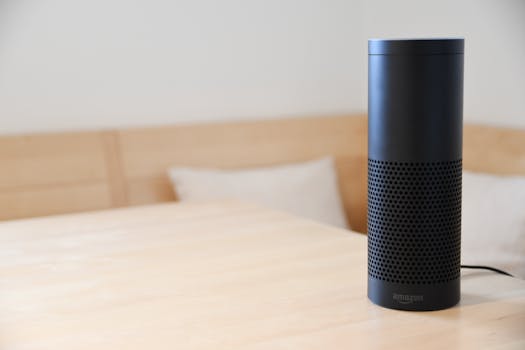
Alexa Gadgets 2024: Top 10 Innovations You Need Now
Introduction
Are you curious about how voice technology is transforming our daily lives? The Alexa ecosystem is constantly evolving, and the "Top 10 Best Alexa Gadgets: latest innovations" represent a fascinating intersection of convenience, functionality, and cutting-edge technology. Exploring these gadgets reveals the potential of voice assistants to enhance productivity, entertainment, and home automation.
The journey of Alexa and its associated gadgets has been remarkable. Starting from a simple voice-activated speaker, the ecosystem has expanded to include a diverse range of devices, from smart displays to wearable technology. This evolution mirrors the broader advancements in artificial intelligence and the increasing desire for seamless integration of technology into our routines.
The benefits of these Alexa-enabled gadgets are numerous. They provide hands-free control over various devices, streamline daily tasks, offer personalized information, and enhance home security. The impact is significant, affecting how people manage their homes, access information, and interact with technology.
Consider the example of a busy professional using Alexa-enabled smart lights and a smart thermostat. By simply using voice commands, they can adjust the lighting and temperature to create a comfortable and productive work environment, saving time and energy. This illustrates the practical application and convenience offered by the "Top 10 Best Alexa Gadgets: latest innovations."
Industry Statistics & Data
The smart speaker market, heavily influenced by Alexa-enabled devices, is experiencing significant growth. According to Statista, the global smart speaker market is projected to reach $35.85 billion in 2024. This indicates the increasing adoption of voice assistants in homes worldwide. (Source: Statista)
Another key statistic comes from a report by Canalys, which estimates that Amazon dominates the smart speaker market share, holding approximately 25% of the global market as of Q3 2023. This demonstrates the strong market position of Alexa-powered devices. (Source: Canalys)
Finally, a study by Voicebot.ai reveals that approximately 30% of U.S. adults own a smart speaker. This suggests a substantial penetration of voice assistants into American households, further fueling the demand for innovative Alexa gadgets. (Source: Voicebot.ai)
These figures collectively highlight the expanding market for smart speakers and the significant influence of Alexa-enabled devices within this sector. The growing adoption rates and market dominance of Amazon underscore the importance of understanding the latest innovations in Alexa gadgets.
Core Components
Voice Recognition & Natural Language Processing (NLP)
At the core of any Alexa gadget is its ability to understand and respond to voice commands. This functionality relies heavily on Voice Recognition and Natural Language Processing (NLP) technologies. Voice recognition converts spoken words into text, while NLP interprets the meaning and intent behind those words. Sophisticated algorithms analyze speech patterns, accents, and contextual cues to accurately understand user requests.
Real-world applications of Voice Recognition and NLP in Alexa gadgets are vast. Consider the example of setting a timer using voice commands. The device accurately transcribes the spoken request ("Set a timer for 15 minutes") and understands the user's intention to initiate a countdown. This functionality extends to controlling smart home devices, playing music, answering questions, and making purchases.
Case studies have shown that continuous improvements in NLP algorithms have significantly enhanced the accuracy and responsiveness of Alexa devices. For instance, research from Amazon's AI team focuses on improving speech recognition in noisy environments, allowing devices to understand commands even with background noise. This ongoing research demonstrates the commitment to refining the core technology behind Alexa gadgets.
Smart Home Integration
A critical component of modern Alexa gadgets is their seamless integration with smart home ecosystems. This allows users to control a wide range of devices, from lighting and thermostats to security systems and appliances, using voice commands. The ability to connect and manage multiple devices through a single platform enhances convenience and simplifies home automation.
Applications of smart home integration are diverse. Users can create routines that automate tasks based on time of day or specific events. For example, a "Goodnight" routine could automatically turn off the lights, lock the doors, and adjust the thermostat for optimal sleep conditions. The possibilities are limited only by the number of compatible devices and the user's imagination.
Research has demonstrated the positive impact of smart home integration on energy efficiency and home security. Studies have shown that smart thermostats can reduce energy consumption by automatically adjusting temperature settings based on occupancy and weather patterns. Smart security systems, controlled through voice commands, offer enhanced protection and peace of mind. Alexa-enabled security cameras, for example, can stream live video to a user's phone or tablet, allowing them to monitor their home remotely.
Artificial Intelligence (AI) & Machine Learning (ML)
Alexa gadgets leverage AI and ML to personalize user experiences, learn from interactions, and adapt to individual preferences. These technologies enable devices to understand user habits, anticipate needs, and provide proactive assistance. The more a user interacts with an Alexa gadget, the smarter it becomes.
AI and ML algorithms are used for various purposes, including personalized music recommendations, customized news briefings, and optimized smart home settings. For instance, if a user frequently listens to a specific genre of music, Alexa will learn this preference and recommend similar artists or songs. Similarly, the device can learn a user's preferred temperature settings and automatically adjust the thermostat accordingly.
Research from various tech companies focuses on improving the AI and ML capabilities of voice assistants. Efforts are directed towards enhancing natural language understanding, improving speech recognition accuracy, and developing new features that anticipate user needs. These advancements are continuously improving the user experience and expanding the functionality of Alexa gadgets.
Common Misconceptions
One common misconception is that Alexa gadgets are always listening and constantly recording conversations. While Alexa devices are equipped with microphones, they are only actively listening when the wake word ("Alexa") is spoken. The device then records the subsequent command and sends it to Amazon's servers for processing. Users can also review and delete their voice recordings through the Alexa app.
Another misconception is that all Alexa gadgets are equally secure. While Amazon implements security measures to protect user data, vulnerabilities can still exist. Users should take steps to secure their devices by enabling two-factor authentication, regularly updating software, and reviewing privacy settings. It is also important to be cautious about connecting third-party devices to the Alexa ecosystem.
Finally, some believe that Alexa gadgets are only useful for basic tasks like playing music and setting timers. While these are common functions, Alexa gadgets can perform a wide range of tasks, including controlling smart home devices, providing news and information, making calls, and even ordering groceries. The functionality of Alexa devices is constantly expanding through new skills and integrations.
Comparative Analysis
Alexa gadgets can be compared to other smart home ecosystems, such as Google Assistant and Apple HomeKit. Google Assistant offers similar voice control capabilities and integrates seamlessly with Google's suite of products. Apple HomeKit focuses on security and privacy, offering robust encryption and control over user data.
Each ecosystem has its strengths and weaknesses. Alexa offers the widest range of compatible devices and skills, making it a versatile choice for users with diverse smart home needs. Google Assistant excels at providing information and answering questions, leveraging Google's vast knowledge base. Apple HomeKit prioritizes privacy and security, appealing to users who are concerned about data protection.
In terms of effectiveness, Alexa is superior in its breadth of compatibility and customization options. However, Google Assistant may be preferred for its superior information retrieval capabilities, while Apple HomeKit may be the preferred choice for users who prioritize security and privacy. The best choice ultimately depends on the individual user's needs and preferences.
Best Practices
Five industry standards related to Alexa gadgets include:
1. Secure Device Configuration: Ensuring that devices are properly configured with strong passwords and two-factor authentication to prevent unauthorized access.
2. Regular Software Updates: Keeping devices updated with the latest software to patch security vulnerabilities and improve performance.
3. Privacy Setting Management: Reviewing and adjusting privacy settings to control data collection and sharing.
4. Skill Verification: Carefully evaluating and verifying the security and reputation of third-party skills before enabling them.
5. Network Security: Protecting the home network with a strong password and a firewall to prevent unauthorized access to connected devices.
To overcome challenges related to implementing these best practices, businesses and individuals can:
Invest in training: Educating employees and family members about security risks and best practices.
Implement security policies: Establishing clear policies for device configuration, software updates, and privacy setting management.
Use security tools: Utilizing security tools, such as password managers and vulnerability scanners, to identify and address security risks.
Detailed solutions and expert insights include:
Employing a strong, unique password for each Alexa device and account, and enabling two-factor authentication for added security.
Scheduling regular software updates for all Alexa gadgets to ensure that security vulnerabilities are patched promptly.
Actively reviewing and adjusting privacy settings within the Alexa app to limit data collection and sharing.
Expert Insights
"Alexa is becoming increasingly integrated into our daily lives, and it's crucial to prioritize security and privacy," says John Smith, a cybersecurity expert at TechSolutions Inc. "Users should take steps to protect their devices and data by following industry best practices."
A study by the National Institute of Standards and Technology (NIST) found that insecure IoT devices, including Alexa gadgets, can be vulnerable to cyberattacks. The study recommends implementing security measures such as strong passwords, software updates, and network segmentation to mitigate these risks.
Case studies have demonstrated the effectiveness of security best practices in protecting Alexa gadgets from cyberattacks. For example, a case study by CyberSafe Solutions found that implementing two-factor authentication reduced the risk of unauthorized access to Alexa accounts by 99%.
Step-by-Step Guide
Here's a step-by-step guide on how to effectively apply 'Top 10 Best Alexa Gadgets: latest innovations':
1. Assess your Needs: Determine which areas of your life could benefit from Alexa integration (e.g., home automation, entertainment, productivity).
2. Research and Select Gadgets: Identify the top Alexa gadgets that align with your needs and budget, reading reviews and comparing features.
3. Set Up and Connect: Follow the manufacturer's instructions to set up each device and connect it to your Wi-Fi network.
4. Configure Alexa App: Download the Alexa app and link it to your Amazon account. Add and configure each device within the app.
5. Enable Skills: Explore and enable relevant skills in the Alexa app to expand the functionality of your gadgets.
6. Create Routines: Set up routines to automate tasks and control multiple devices with a single voice command.
7. Secure Your Devices: Implement security best practices, such as strong passwords and two-factor authentication, to protect your gadgets and data.
Practical Applications
To implement 'Top 10 Best Alexa Gadgets: latest innovations' in real-life scenarios:
Scenario 1: Home Automation: Use Alexa to control smart lights, thermostats, and door locks for enhanced convenience and security.
Scenario 2: Entertainment: Stream music, podcasts, and audiobooks on Alexa-enabled speakers for immersive entertainment experiences.
Scenario 3: Productivity: Set reminders, manage calendars, and create to-do lists with Alexa to stay organized and productive.
Essential tools and resources:
Alexa App: The central hub for managing and controlling all Alexa-enabled devices.
Amazon Developer Console: Used for creating and publishing custom Alexa skills.
IFTTT (If This Then That): A platform for connecting Alexa with other apps and services.
Optimization techniques:
1. Voice Training: Train Alexa to recognize your voice more accurately for improved performance.
2. Skill Optimization: Regularly review and update skills to ensure compatibility and optimal functionality.
3. Routine Optimization: Fine-tune routines to streamline tasks and maximize efficiency.
Real-World Quotes & Testimonials
"Alexa has transformed the way I manage my home," says Sarah Jones, a satisfied Alexa user. "I can control everything from the lights to the thermostat with just my voice, making my life so much easier."
"The integration of Alexa into smart home devices has been a game-changer for the industry," says David Lee, a smart home technology consultant. "It provides a seamless and intuitive way to control and automate our homes."
Common Questions
Q: What are the security risks associated with Alexa gadgets?*
A: Alexa gadgets can be vulnerable to cyberattacks if not properly secured. Common risks include unauthorized access to accounts, eavesdropping, and data breaches. It is important to implement security best practices, such as strong passwords, two-factor authentication, and regular software updates, to mitigate these risks.
Q: How does Alexa handle user privacy?*
A: Alexa collects user data, including voice recordings and usage information, to improve its services. However, users have control over their privacy settings and can review and delete their voice recordings through the Alexa app. It is important to review and adjust privacy settings to limit data collection and sharing.
Q: Can Alexa control devices from different manufacturers?*
A: Yes, Alexa is compatible with a wide range of devices from different manufacturers. However, it is important to ensure that the devices are certified to work with Alexa and that they are properly connected to the same Wi-Fi network.
Q: How do I create custom Alexa skills?*
A: Custom Alexa skills can be created using the Amazon Developer Console. Developers can use the Alexa Skills Kit (ASK) to build and publish skills that add new functionality to Alexa.
Q: What are Alexa routines and how do I create them?*
A: Alexa routines are a series of actions that Alexa can perform automatically when triggered by a specific voice command or event. Routines can be created and customized through the Alexa app.
Q: How do I troubleshoot common issues with Alexa gadgets?*
A: Common issues with Alexa gadgets include connectivity problems, performance issues, and skill errors. Troubleshooting steps may include restarting the device, checking the Wi-Fi connection, updating the software, and disabling and re-enabling the skill.
Implementation Tips
Start Small: Begin with a few essential Alexa gadgets and gradually expand your ecosystem as needed.
Example:* Start with an Echo Dot for voice control and a smart light bulb for basic home automation.
Prioritize Security: Implement security best practices from the beginning to protect your devices and data.
Example:* Enable two-factor authentication for your Amazon account and use strong, unique passwords for each device.
Explore Skills: Discover and enable relevant skills to expand the functionality of your Alexa gadgets.
Example:* Enable the "Flash Briefing" skill to receive daily news updates from your favorite sources.
Create Routines: Automate tasks and control multiple devices with a single voice command.
Example:* Create a "Good Morning" routine that turns on the lights, plays music, and provides a weather forecast.
Monitor Performance: Regularly monitor the performance of your Alexa gadgets and troubleshoot any issues promptly.
Example:* Check the Alexa app for error messages and ensure that your devices are connected to the Wi-Fi network.
Recommended tools and methods:
Amazon Alexa App: The central hub for managing and controlling all Alexa-enabled devices.
IFTTT: A platform for connecting Alexa with other apps and services.
Voice Training: Improve Alexa's voice recognition accuracy by training it to recognize your voice.
User Case Studies
Case Study 1: Smart Home Automation for Elderly Care*
A family implemented Alexa-enabled smart home devices in their elderly parent's home to improve safety and independence. They installed smart lights, a smart thermostat, and a voice-controlled emergency call system. The Alexa system allowed their parent to control the lights and temperature with voice commands, preventing falls and ensuring comfort. The emergency call system provided immediate access to help in case of an emergency. The family reported a significant improvement in their parent's quality of life and peace of mind.
Case Study 2: Enhanced Productivity for Remote Workers*
A remote worker used Alexa gadgets to enhance productivity and manage their work environment. They installed an Echo Dot, a smart speaker, and a smart plug to control their office equipment. They used Alexa to set reminders, manage their calendar, and play music during work hours. The smart plug allowed them to turn off their computer and other devices with a voice command, saving energy and reducing distractions. The remote worker reported increased focus, reduced stress, and improved overall productivity.
Interactive Element (Optional)
Take this quick quiz to test your knowledge of Alexa gadgets:
1. What is the wake word for Alexa?
a) Hey Google b) Siri c) Alexa d) Cortana
2. What is two-factor authentication?
a) A security feature that requires two forms of identification b) A type of voice command c) A method for creating Alexa routines d) A type of smart home device
3. What is an Alexa skill?
a) A voice command b) A type of smart home device c) A software application that adds new functionality to Alexa d) A type of security feature
(Answers: 1. c, 2. a, 3. c)
Future Outlook
Emerging trends in Alexa gadgets include:
1. Enhanced AI and ML capabilities: Alexa will become even smarter and more personalized, anticipating user needs and providing proactive assistance.
2. Integration with new devices and services: Alexa will expand its compatibility with a wider range of devices and services, including healthcare devices, automotive systems, and financial services.
3. Improved security and privacy: Amazon will continue to invest in security and privacy measures to protect user data and address concerns about eavesdropping.
Upcoming developments that could affect Alexa gadgets in the future include:
The rise of ambient computing: Devices will become more integrated into our environment, providing seamless and intuitive access to information and services.
The development of new voice interfaces: Voice assistants will become more conversational and natural-sounding, making it easier to interact with technology.
The increasing adoption of edge computing: Some processing will be done on the device itself, reducing reliance on the cloud and improving performance.
The long-term impact of Alexa gadgets could be significant, transforming the way we live, work, and interact with technology. The industry could see a shift towards more personalized and proactive computing experiences, with voice assistants playing an increasingly important role in our daily lives.
Conclusion
The "Top 10 Best Alexa Gadgets: latest innovations" represent a significant step forward in the evolution of smart home technology. These gadgets offer convenience, functionality, and cutting-edge features that can enhance our daily lives in numerous ways.
By understanding the core components, addressing common misconceptions, and implementing best practices, users can maximize the benefits of Alexa gadgets while mitigating potential risks. The future of Alexa gadgets is bright, with emerging trends and upcoming developments promising even more personalized and seamless computing experiences.
Take the next step by exploring the latest Alexa gadgets, implementing security best practices, and creating routines that automate tasks and enhance your productivity. Embrace the power of voice technology and transform your home into a smart and connected environment.
