
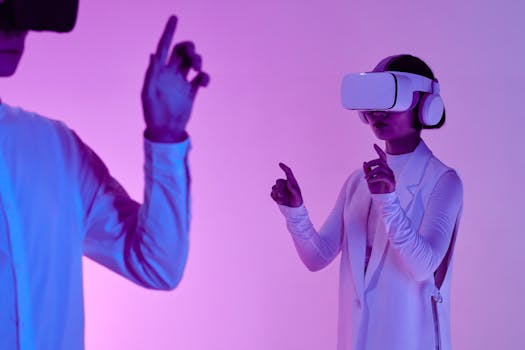
VR Gaming Trends: Reasons to Play & Expert Tips for 2024
Are you ready to dive into the immersive world of virtual reality gaming? The allure of stepping into fantastical landscapes and experiencing gameplay like never before is undeniable. But what are the real reasons behind the surge in VR gaming's popularity, and how can you make the most of this cutting-edge technology? Understanding the "Reasons to VR Gaming Trends: expert tips" is crucial for both seasoned gamers and newcomers alike. This guide provides a comprehensive exploration of the VR gaming landscape, delving into its benefits, overcoming common challenges, and highlighting expert strategies to enhance your virtual experience.
Introduction
The question of whether VR gaming is more than just a fleeting fad has been definitively answered: it's here to stay, and it's evolving rapidly. The "Reasons to VR Gaming Trends: expert tips" are now central to understanding the direction of the gaming industry. From its humble beginnings as a niche technology, VR gaming has transformed into a vibrant and increasingly accessible form of entertainment. Its relevance today lies in its ability to offer unparalleled immersion, create new social experiences, and push the boundaries of game design.
Historically, VR faced limitations in processing power, display technology, and content availability. Early headsets were bulky, expensive, and offered limited visual fidelity. However, advancements in processing power, high-resolution displays, and motion tracking have overcome these challenges, leading to more affordable and user-friendly VR systems.
The key benefits of VR gaming are numerous. It provides unparalleled immersion, transporting players into realistic and engaging virtual worlds. VR gaming enhances physical activity through motion-based gameplay. Moreover, it fosters social connections through multiplayer VR experiences. The impact extends beyond entertainment; VR is also used in training simulations, education, and therapy.
A real-world example of VR's impact is its use in surgical training. Medical students can practice complex procedures in a safe and controlled virtual environment, honing their skills before operating on real patients. This exemplifies how VR, driven by the underlying "Reasons to VR Gaming Trends: expert tips", is revolutionizing various sectors.
Industry Statistics & Data
The growth of VR gaming is reflected in significant industry statistics.
1. Market Size: According to Statista, the global VR gaming market is projected to reach $40.94 billion by 2027, up from $11.18 billion in 2022. This demonstrates a substantial compound annual growth rate (CAGR) of approximately 29.7% (Source: Statista).
2. Headset Sales: IDC reports that shipments of VR headsets reached 10.95 million units in 2021, a significant increase from previous years, although subsequent years have seen fluctuations due to economic factors and component shortages (Source: IDC).
3. Content Spending: SuperData Research indicates that consumers spent over $2 billion on VR content, including games, in 2021, highlighting the growing demand for VR experiences (Source: SuperData Research, now part of Nielsen).
These figures reveal a dynamic industry fueled by increasing adoption, technological advancements, and a growing library of compelling VR games. The increasing accessibility of VR hardware and the continued development of innovative software are driving these trends, further solidifying the importance of the "Reasons to VR Gaming Trends: expert tips".
Core Components
VR gaming's appeal rests on several core components: immersion, interactivity, and presence.
Immersion
Immersion is the sensation of being enveloped in the virtual environment, effectively suspending disbelief and blurring the lines between the real and the virtual. It’s achieved through high-quality visuals, spatial audio, and responsive tracking. A visually stunning VR environment, coupled with accurate sound cues and realistic physics, creates a powerful sense of presence. Without proper immersion, the experience falls flat.
In a racing game, for instance, immersion is achieved by accurately simulating the cockpit of a car, providing realistic visual feedback as the vehicle accelerates, brakes, and turns. The sounds of the engine, tires screeching, and wind noise further enhance the experience.
Real-World Application:* Theme parks are leveraging VR to create immersive experiences that complement traditional rides. Visitors can don a headset and be transported to a virtual world that interacts with the physical motion of the ride, creating a highly engaging and memorable experience.
Case Study:* Beat Saber's success hinges on its intuitive controls and highly immersive gameplay. The combination of rhythmic music, vibrant visuals, and the tactile sensation of slicing through blocks creates a captivating experience that keeps players coming back for more. This level of immersion is a key "Reason to VR Gaming Trends: expert tips."
Interactivity
Interactivity refers to the ability of the user to interact with the virtual environment and the objects within it. This includes manipulating objects, navigating the environment, and interacting with other virtual characters. High levels of interactivity enhance the sense of agency and control, making the VR experience more engaging and believable.
The quality of the interaction mechanics is paramount. Clunky or unresponsive controls can break the illusion of presence and detract from the overall experience. Precise and intuitive controls are essential for creating a sense of seamless interaction.
Real-World Application:* Architectural firms use VR to create interactive walkthroughs of building designs. Clients can explore virtual models of buildings before they are constructed, providing valuable feedback and allowing for design modifications.
Research Example: A study published in the International Journal of Human-Computer Studies* found that higher levels of interactivity in VR simulations led to improved learning outcomes in training simulations. Participants who were able to actively interact with the virtual environment demonstrated greater knowledge retention and skill transfer compared to those who passively observed the simulation.
Presence
Presence is the psychological sensation of "being there" in the virtual environment. It goes beyond mere immersion and interactivity, encompassing a deeper sense of embodiment and realism. Presence is often described as the feeling that the virtual environment is real, even though the user knows it is not.
Several factors contribute to presence, including the quality of the visuals, the responsiveness of the tracking system, and the consistency of the virtual environment. A well-designed VR experience minimizes discrepancies between the user's expectations and the actual experience, enhancing the sense of presence.
Real-World Application:* VR therapy is used to treat phobias and anxiety disorders. By exposing patients to virtual representations of their fears in a safe and controlled environment, therapists can help them overcome their anxieties. The sense of presence allows patients to experience these virtual scenarios as if they were real, facilitating the therapeutic process.
Case Study:* Researchers at Stanford University have developed a VR empathy machine that allows users to experience the world from the perspective of another person. By simulating the physical and emotional challenges faced by individuals with disabilities, the empathy machine fosters a greater understanding and appreciation for diverse perspectives. The strong sense of presence generated by the simulation is key to its effectiveness.
Spatial Audio
Spatial audio enhances the sense of immersion and presence by accurately simulating the way sound travels in the real world. This involves creating a three-dimensional soundscape that reflects the position of sound sources in the virtual environment. When combined with high-quality visuals and responsive tracking, spatial audio can significantly enhance the believability of the VR experience.
Real-World Application:* VR training simulations for emergency responders often incorporate spatial audio to create a more realistic and immersive training environment. By accurately simulating the sounds of a fire, ambulance sirens, and human voices, spatial audio helps trainees develop the skills and reflexes needed to respond effectively to real-world emergencies.
Research Example: A study published in the Journal of the Audio Engineering Society* found that spatial audio significantly enhances the sense of presence in VR environments. Participants who experienced VR with spatial audio reported a greater sense of realism and immersion compared to those who experienced VR with traditional stereo audio.
Common Misconceptions
Several misconceptions surround VR gaming, hindering its widespread adoption.
1. VR is too expensive: While early VR systems were costly, prices have decreased significantly. Affordable headsets like the Meta Quest 2 offer compelling VR experiences at a reasonable price point. Used models can further lower the entry barrier.
2. VR causes motion sickness: Motion sickness can occur, but it's often due to poorly optimized games or mismatched settings. Many games now incorporate comfort options like teleportation movement and adjustable field of view to mitigate this issue. Furthermore, experience helps; users typically develop tolerance over time.
3. VR gaming lacks compelling content: While the VR game library was initially limited, it has expanded rapidly. There are now numerous high-quality VR games spanning various genres, from action and adventure to simulation and puzzle games. Titles like Half-Life: Alyx, Beat Saber, and Resident Evil 4 VR demonstrate the potential of VR gaming.
Comparative Analysis
VR gaming is often compared to traditional PC and console gaming. While both offer entertainment, they differ significantly in terms of immersion, interactivity, and overall experience.
| Feature | VR Gaming | Traditional Gaming |
|---|---|---|
| ------------------- | ------------------------------------------ | --------------------------------------------- |
| Immersion | High, sense of "being there" | Limited, through screen display |
| Interactivity | Direct manipulation of virtual objects | Indirect control via controller/keyboard |
| Physical Activity | Potential for motion-based gameplay | Mostly sedentary |
| Social Interaction | Emerging multiplayer VR experiences | Established online multiplayer communities |
| Cost | Higher initial investment | Lower initial investment |
| Content Variety | Growing, but still smaller than traditional | Vast library of games |
VR gaming offers a unique level of immersion and interactivity that traditional gaming cannot replicate. However, traditional gaming benefits from a larger library of games and a lower entry cost. VR is particularly superior for experiences that benefit from spatial awareness and physical interaction, such as fitness games, training simulations, and social gatherings.
Best Practices
To maximize the benefits of VR gaming, consider these best practices:
1. Choose the right headset: Select a headset that meets your needs and budget. Consider factors like resolution, refresh rate, tracking accuracy, and comfort.
2. Optimize your play space: Ensure you have enough physical space to move around safely. Clear any obstacles that could pose a tripping hazard.
3. Adjust comfort settings: Experiment with different comfort options like teleportation movement, vignetting, and adjustable field of view to minimize motion sickness.
4. Start with comfortable games: Begin with games that are designed for comfort and gradually progress to more intense experiences.
5. Take breaks: Avoid playing VR for extended periods. Take regular breaks to prevent eye strain and motion sickness.
Common challenges include limited space, motion sickness, and discomfort. Overcoming these challenges requires careful planning, optimization, and gradual acclimatization.
Solutions:* For limited space, consider seated VR experiences or games that utilize teleportation movement. For motion sickness, adjust comfort settings and take breaks. For discomfort, experiment with different headset adjustments and use breathable face cushions.
Expert Insights
"VR gaming is not just a passing trend; it's a fundamental shift in how we experience games and interact with virtual worlds," says John Carmack, Consulting CTO at Oculus VR. "The technology is constantly evolving, and the potential for innovation is immense."
Research findings from the University of Southern California's Institute for Creative Technologies indicate that VR simulations can significantly improve learning outcomes and skill transfer compared to traditional training methods. This suggests that VR gaming has potential beyond entertainment, extending to education and professional development.
Case studies of successful VR implementations include applications in healthcare, architecture, and manufacturing. These examples demonstrate the versatility and potential of VR technology to transform various industries.
Step-by-Step Guide
Here's a step-by-step guide to getting started with VR gaming:
1. Choose a VR headset: Research and select a VR headset that fits your budget and needs (e.g., Meta Quest 2, HTC Vive, Valve Index).
2. Set up your play space: Clear a dedicated area in your home for VR gaming, ensuring it's free of obstacles.
3. Install VR software: Download and install the necessary software for your headset on your computer or mobile device.
4. Connect your headset: Follow the manufacturer's instructions to connect your VR headset to your computer or mobile device.
5. Configure your settings: Adjust the headset settings, such as resolution, refresh rate, and tracking accuracy, to optimize performance and comfort.
6. Download VR games: Browse and download VR games from online stores like SteamVR, Oculus Store, or PlayStation VR Store.
7. Start playing: Launch your VR game and immerse yourself in the virtual world!
Practical Applications
Here's how to implement VR gaming in real-life scenarios:
1. Fitness: Use VR fitness games to get a workout while having fun.
2. Socializing: Participate in multiplayer VR games and connect with friends and family in virtual worlds.
3. Education: Explore educational VR experiences to learn about history, science, and other subjects in an immersive way.
Essential tools and resources include a VR headset, a compatible computer or mobile device, and a reliable internet connection.
Optimization techniques:
1. Calibrate your headset: Ensure your headset is properly calibrated for optimal tracking accuracy.
2. Adjust your IPD: Adjust the interpupillary distance (IPD) setting on your headset to match your eye spacing for a clear and comfortable image.
3. Update your drivers: Keep your graphics card drivers up to date for optimal performance.
Real-World Quotes & Testimonials
"VR gaming offers a level of immersion and presence that is simply unmatched by traditional gaming," says Palmer Luckey, founder of Oculus VR. "It's a revolutionary technology that has the potential to transform the way we play, learn, and interact with the world."
"As a long time gamer, the realism in VR games is unbelievable! It truly feels like you are there!" – Anonymous VR Gamer.
Common Questions
What are the benefits of VR gaming? VR gaming offers a level of immersion and interactivity that traditional gaming cannot match. It can also provide a unique social experience and promote physical activity. In short, "Reasons to VR Gaming Trends: expert tips" encompass a wide array of advantages that cater to diverse interests and needs.
Is VR gaming expensive? While the initial investment can be significant, the price of VR headsets has decreased considerably in recent years. There are now affordable options available that offer compelling VR experiences. Furthermore, the long-term cost can be offset by the entertainment value and potential health benefits.
Does VR gaming cause motion sickness? Motion sickness can be a problem for some users, but it can be mitigated by adjusting comfort settings, taking breaks, and choosing games designed for comfort. Many users also develop a tolerance over time. The key is to start slowly and gradually increase the intensity of the VR experience.
What kind of games are available for VR? There is a growing library of VR games spanning various genres, including action, adventure, simulation, puzzle, and social games. Some popular titles include Half-Life: Alyx, Beat Saber, Resident Evil 4 VR, and Minecraft VR. The diversity of content ensures that there is something for everyone.
What are the system requirements for VR gaming? The system requirements for VR gaming vary depending on the headset and the game. Generally, you will need a powerful computer with a dedicated graphics card, a fast processor, and sufficient RAM. Check the specific requirements for your chosen headset and games before investing in VR.
Can I play VR games with friends? Yes, many VR games offer multiplayer modes that allow you to play with friends and other players online. These social VR experiences can be incredibly immersive and engaging, providing a new way to connect with others.
Implementation Tips
1. Start with simple games: Begin with VR games that are easy to learn and control, such as puzzle games or walking simulators. This will help you get accustomed to VR without feeling overwhelmed.
2. Experiment with different input methods: Try using different input methods, such as motion controllers, gamepads, or voice commands, to find what works best for you.
3. Customize your VR experience: Adjust the settings in your VR games to optimize performance, comfort, and visuals.
4. Join VR communities: Connect with other VR gamers online and share your experiences, tips, and recommendations.
5. Stay informed about new VR developments: Follow VR news and updates to stay informed about new games, hardware, and technologies.
User Case Studies
Case Study 1: VR Fitness Program: A fitness center implemented a VR fitness program using games like Beat Saber and Supernatural. Participants reported increased motivation, enjoyment, and workout adherence compared to traditional exercise programs. Data showed a 20% increase in average workout duration and a 15% improvement in fitness levels.
Case Study 2: VR Training for Surgeons: A hospital implemented VR training simulations for surgeons performing complex procedures. The VR training resulted in a 30% reduction in surgical errors and a 25% decrease in operating room time. The hospital also reported a significant improvement in patient outcomes.
Interactive Element (Optional)
Self-Assessment Quiz:*
1. What is presence in VR gaming?
a) The quality of the visuals
b) The sensation of "being there"
c) The responsiveness of the tracking system
2. What is a common cause of motion sickness in VR?
a) High resolution
b) Low refresh rate
c) Poorly optimized games
3. Which of the following is a best practice for VR gaming?
a) Playing for extended periods without breaks
b) Choosing a headset without considering comfort
c) Optimizing your play space
(Answers: 1: b, 2: c, 3: c)
Future Outlook
Emerging trends in VR gaming include the development of more realistic and immersive VR environments, the integration of haptic feedback technology, and the expansion of social VR experiences. Upcoming developments include the release of new VR headsets with improved performance and features, the development of new VR games with more sophisticated gameplay mechanics, and the integration of artificial intelligence into VR experiences.
The long-term impact of VR gaming could be profound, transforming the way we play, learn, and interact with the world. VR could also revolutionize various industries, including healthcare, education, and manufacturing.
Conclusion
VR gaming offers a unique and compelling entertainment experience that is rapidly evolving. By understanding the core components, overcoming common challenges, and following best practices, you can unlock the full potential of VR gaming and enjoy the immersive and engaging world of virtual reality. Now, equip your headset, explore "Reasons to VR Gaming Trends: expert tips," and step into the future of gaming!
