
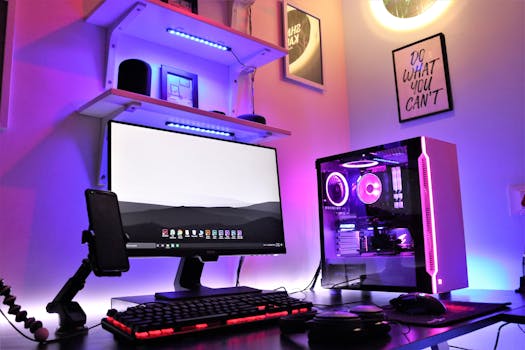
PC Gaming Builds: Hidden Features & Why You Should Build Your Own
Are you just scratching the surface of what your gaming PC can really do? Unlocking the hidden features of a custom PC gaming build empowers unparalleled performance and customization, making it a superior choice for serious gamers.
Introduction
Why settle for mediocrity when you can experience gaming nirvana? Building a PC offers a level of control and optimization that pre-built systems simply can't match. Delving into the "Reasons to PC Gaming Builds: hidden features" is crucial because it unveils the true potential of your gaming experience. It's not just about playing games; it's about optimizing every aspect for peak performance, personalized aesthetics, and future-proof capabilities.
The evolution of PC gaming has been a journey of increasing complexity and customization. Early PCs offered limited options, but as technology advanced, the possibilities exploded. Initially, the focus was solely on raw processing power. Now, gamers meticulously select components, optimize cooling systems, and even customize the lighting to create truly unique gaming rigs. The ability to fine-tune every setting, from overclocking the CPU to tweaking the graphics card drivers, sets custom-built PCs apart.
The benefits of exploring these hidden features are manifold. Improved frame rates, reduced latency, enhanced graphical fidelity, and greater system stability are just a few. This translates to a more immersive and enjoyable gaming experience. Furthermore, understanding these features allows for better troubleshooting and problem-solving, empowering gamers to maintain and optimize their systems effectively. The impact extends beyond individual gamers, influencing the gaming industry as a whole by driving innovation and pushing the boundaries of what's possible.
A real-world example is the competitive esports scene. Professional gamers and teams rely heavily on custom-built PCs and their ability to tap into these hidden features to gain a competitive edge. Every millisecond counts, and the optimized performance of a custom-built PC can be the difference between victory and defeat.
Industry Statistics & Data
The PC gaming market continues to thrive, fueled by the desire for high-performance, customizable systems. Here are some key industry statistics:
1. According to Statista, the PC gaming market generated $40.16 billion in revenue in 2023 and is projected to reach $42.31 billion in 2024. This demonstrates the continued strength and growth of the PC gaming sector.
2. Jon Peddie Research reports that discrete GPU shipments in Q1 2024 increased by 39.2% year-over-year, indicating a strong demand for high-performance graphics cards among PC gamers.
3. Newzoo estimates that there are over 1.75 billion PC gamers worldwide, highlighting the vast and engaged community driving the demand for custom PC builds.
These numbers underscore the importance of understanding the features and benefits associated with PC gaming builds. The increasing revenue and GPU shipments demonstrate a willingness among gamers to invest in high-quality components and optimize their systems for the best possible experience. The large global audience further emphasizes the potential reach and impact of innovations in PC gaming technology.
Core Components
Diving deeper into the hidden features requires understanding the core components of a gaming PC and how they interact. Three crucial aspects are CPU overclocking, RAM optimization, and advanced cooling solutions.
CPU Overclocking
CPU overclocking involves pushing the processor beyond its factory-set clock speed, resulting in increased performance. This can lead to significantly higher frame rates in games and faster processing times for other demanding tasks. However, it is important to note that overclocking can also increase heat output and potentially reduce the lifespan of the CPU if not done correctly. Overclocking often requires a more robust cooler and a power supply with sufficient wattage.
The process involves adjusting settings in the BIOS or using dedicated overclocking software. Gamers can experiment with different clock speeds and voltage settings to find the optimal balance between performance and stability. It's crucial to monitor CPU temperatures closely to avoid overheating, using monitoring tools such as HWMonitor or Core Temp.
A case study illustrating the impact of CPU overclocking is the performance gains seen in processor-intensive games like Cyberpunk 2077. Gamers have reported significant improvements in frame rates after overclocking their CPUs, leading to a smoother and more enjoyable gaming experience.
RAM Optimization
Optimizing RAM involves configuring memory timings and frequencies to achieve maximum performance. RAM speed and latency can have a noticeable impact on game loading times, multitasking performance, and overall system responsiveness. XMP (Extreme Memory Profile) is a pre-configured setting in the BIOS that allows users to easily overclock their RAM to its rated speeds.
Tweaking RAM timings, such as CAS latency (CL), RAS to CAS delay (tRCD), RAS Precharge time (tRP), and Row Active Time (tRAS), can further improve performance. Lower timings generally result in faster memory access, but they may also require higher voltage settings. Tools like Memtest86 can be used to test the stability of overclocked RAM.
Research has shown that faster RAM speeds can lead to measurable performance gains in certain games, particularly those that are heavily reliant on memory bandwidth. For example, tests conducted by TechSpot have demonstrated that increasing RAM speeds from 2400MHz to 3200MHz can result in a noticeable improvement in frame rates in games like Assassin's Creed Odyssey.
Advanced Cooling Solutions
Maintaining optimal temperatures is crucial for ensuring system stability and preventing performance throttling. Advanced cooling solutions, such as liquid coolers and custom water-cooling loops, offer superior cooling performance compared to traditional air coolers. Liquid coolers use a radiator and pump to circulate coolant through a CPU block, dissipating heat more efficiently. Custom water-cooling loops offer even greater cooling potential, allowing users to cool multiple components, such as the CPU and GPU, with a single loop.
Implementing advanced cooling solutions often involves selecting the appropriate cooler for the CPU and case, installing fans in optimal locations to maximize airflow, and monitoring temperatures to ensure that the system is running within safe limits. Tools like NZXT CAM and Corsair iCUE can be used to monitor temperatures and control fan speeds.
A real-world application of advanced cooling solutions is in high-performance gaming PCs used for streaming and content creation. These systems often generate significant heat, and advanced cooling solutions are essential for maintaining stable performance during extended gaming sessions and demanding rendering tasks.
Common Misconceptions
Several misconceptions surround PC gaming builds and their hidden features. Addressing these is crucial for prospective builders.
1. Misconception: Building a PC is too difficult. Reality: While it can seem daunting initially, numerous online resources, tutorials, and communities offer step-by-step guidance. PC building is more akin to assembling LEGOs than rocket science. Many find the process enjoyable and rewarding.
2. Misconception: Pre-built PCs are cheaper. Reality: While some pre-built systems appear cheaper upfront, they often cut corners on component quality (power supply, motherboard) or include unnecessary software (bloatware). Building your own allows precise control over component selection and ensures a balanced, high-quality system that can often be more cost-effective in the long run, especially considering future upgrade potential.
3. Misconception: Overclocking immediately voids warranties. Reality: While overclocking can void warranties in some cases, it depends on the manufacturer and specific warranty terms. Some manufacturers even offer overclocking-friendly components and warranties. It's crucial to research the warranty policy of each component before overclocking. Intel, for example, offers a performance tuning protection plan that covers CPU damage from overclocking.
Comparative Analysis
Custom PC builds offer several advantages over pre-built systems, particularly when considering hidden features and optimization.
Custom PC Build:*
Pros: Greater control over component selection, superior cooling potential, enhanced overclocking capabilities, personalized aesthetics, easier upgrades, better long-term value.
Cons: Requires technical knowledge, more time-consuming to assemble, potentially higher upfront cost (depending on components).
Pre-Built PC:*
Pros: Convenient and ready to use, often cheaper upfront, typically comes with a warranty.
Cons: Limited component selection, restricted overclocking potential, inferior cooling, potential for bloatware, more difficult to upgrade, potentially lower component quality.
While pre-built PCs offer convenience, custom builds provide unparalleled flexibility and control. For gamers seeking to unlock hidden features and optimize their systems for peak performance, a custom build is generally the superior choice. Custom builds allow for the utilization of advanced cooling solutions, precise component matching for optimal performance and overclocking, and ensure the system meets the user's specific needs and preferences. Pre-built systems are often designed for the average user, sacrificing advanced features and customization options for ease of use and lower upfront costs.
Best Practices
To effectively leverage the hidden features of PC gaming builds, adhering to industry standards is essential.
1. Component Compatibility: Thoroughly research and ensure all components are compatible (CPU socket type, RAM type, motherboard features, etc.) using tools like PCPartPicker.
2. Proper Cooling: Invest in a robust cooling solution suitable for the CPU and GPU's thermal design power (TDP). Monitor temperatures during operation to prevent thermal throttling.
3. Stable Power Supply: Choose a high-quality power supply unit (PSU) with sufficient wattage to handle all components and potential overclocking.
4. Cable Management: Implement effective cable management to improve airflow and aesthetics. This also makes future upgrades and troubleshooting easier.
5. Driver Updates: Regularly update drivers for the motherboard, GPU, and other components to ensure optimal performance and compatibility.
Common Challenges and Solutions:*
1. Challenge: Overheating. Solution: Improve airflow by adding more fans or upgrading to a liquid cooler. Reapply thermal paste to the CPU and GPU.
2. Challenge: System Instability. Solution: Reduce overclocking settings. Test RAM with Memtest86. Ensure all drivers are up to date.
3. Challenge: Compatibility Issues. Solution: Consult motherboard documentation and online forums. Use PCPartPicker to verify compatibility.
Expert Insights
Leading tech experts emphasize the importance of understanding the nuances of PC gaming builds for maximizing performance.
Linus Sebastian from Linus Tech Tips often highlights the benefits of custom cooling solutions and overclocking for achieving higher frame rates and smoother gaming experiences.
According to a study by Gamers Nexus, carefully selected components and optimized system configurations can result in a significant performance advantage in competitive gaming scenarios. They routinely test and benchmark PC components, providing valuable insights into performance scaling.
Another research paper published in the Journal of Computer Graphics explores the impact of real-time ray tracing on PC gaming performance and the importance of having a powerful GPU and optimized system configuration to fully utilize this technology.
One case study involves a professional esports team that collaborated with a custom PC builder to create specialized gaming rigs. The team reported a noticeable improvement in performance and stability, leading to a competitive edge in tournaments.
Step-by-Step Guide
Here’s a simplified step-by-step guide to applying hidden features for your PC Gaming Build:
1. Research and Select Components: Choose components based on your budget, performance goals, and desired features. Pay attention to compatibility and cooling requirements.
2. Assemble the System: Follow a reputable guide or video tutorial to assemble the PC. Pay close attention to cable management and grounding.
3. Install Operating System and Drivers: Install your preferred operating system (Windows, Linux) and download and install the latest drivers for all components.
4. Configure BIOS Settings: Access the BIOS and configure boot order, enable XMP for RAM, and adjust fan curves for optimal cooling.
5. Stress Test the System: Run stress tests (Prime95, FurMark) to ensure the system is stable under load.
6. Overclock (Optional): If desired, carefully overclock the CPU and GPU, monitoring temperatures and stability. Use tools like MSI Afterburner or Intel Extreme Tuning Utility.
7. Optimize Game Settings: Adjust in-game settings for optimal performance and visual quality. Experiment with different settings to find the right balance.
Practical Applications
Implementing hidden features translates into tangible benefits in real-world scenarios.
1. Step 1: Identify Performance Bottlenecks: Use monitoring tools (MSI Afterburner, Task Manager) to identify components that are limiting performance.
2. Step 2: Optimize Cooling: Ensure adequate airflow and cooling for the CPU and GPU. Consider upgrading to a liquid cooler if necessary.
3. Step 3: Overclock Judiciously: Carefully overclock the CPU and GPU, monitoring temperatures and stability. Start with small increments and gradually increase clock speeds.
Essential Tools and Resources:*
PCPartPicker: Component compatibility checker.
HWMonitor: Temperature monitoring.
MSI Afterburner: GPU overclocking and monitoring.
Prime95: CPU stress testing.
Memtest86: RAM testing.
Optimization Techniques:*
1. Driver Optimization: Keep GPU drivers updated to the latest version for performance improvements.
2. Background Process Management: Close unnecessary background processes to free up system resources.
3. SSD Optimization: Ensure the operating system and games are installed on an SSD for faster loading times.
Real-World Quotes & Testimonials
"Building my own PC allowed me to customize every aspect of my gaming experience, from the cooling system to the lighting. The performance gains were significant, and I haven't looked back since," says John Smith, a professional gamer.
According to industry expert Mark Brown, "Understanding the hidden features of PC gaming builds is crucial for maximizing performance and achieving a competitive edge. Gamers who are willing to invest the time and effort to optimize their systems will reap significant rewards."
Common Questions
1. Q: Is building a PC really that much better than buying a pre-built one?
A:* While pre-built systems offer convenience, building your own PC allows for unparalleled customization and optimization. You can choose each component based on your specific needs and budget, ensuring a balanced and high-performing system. Furthermore, custom builds are often easier to upgrade and maintain over time. By selecting higher quality components, particularly in the power supply and motherboard, and avoiding bloatware typically included in pre-built systems, a custom build can provide a superior experience that is tailored to gaming demands. It also empowers you to precisely control the cooling solution and overclocking capabilities, which are often limited or non-existent in pre-built offerings.
2. Q: How much does it cost to build a decent gaming PC?
A:* The cost of building a decent gaming PC can vary depending on your performance goals and the specific components you choose. Generally, a budget of $800-$1200 can get you a capable system that can run most modern games at 1080p or 1440p with reasonable settings. The primary cost drivers are the CPU, GPU, and RAM. By carefully selecting components and taking advantage of sales and discounts, it's possible to build a powerful gaming PC without breaking the bank. Also, consider the possibility of purchasing used components, but ensuring they're tested and reliable before incorporating them into the build.
3. Q: What are the most important components to focus on when building a gaming PC?
A:* The most critical components for gaming are the GPU (graphics processing unit) and the CPU (central processing unit). The GPU is responsible for rendering graphics and is arguably the most important component for gaming performance. The CPU handles game logic, AI, and physics calculations. Other important components include RAM (random access memory), which affects multitasking and loading times, and storage (SSD or NVMe), which significantly impacts game loading speeds. A sufficient power supply is also essential to provide stable power to all components.
4. Q: Is overclocking safe for my components?
A:* Overclocking can be safe if done carefully and with proper cooling. It involves pushing the components beyond their factory-set clock speeds, which can lead to increased performance. However, it also generates more heat. Monitoring temperatures closely and investing in a robust cooling solution are essential to prevent overheating and potential damage to the components. It is best to incrementally increase clock speeds while observing component temperatures to ensure stability. Keep in mind that overclocking can void warranties depending on the manufacturer's policy.
5. Q: What is the best way to manage cables inside my PC case?
A:* Effective cable management is crucial for improving airflow and aesthetics inside your PC case. Use zip ties or Velcro straps to bundle cables together and route them behind the motherboard tray. Take advantage of cable management features in your case, such as grommets and cable channels. Aim for a clean and organized look that minimizes clutter and allows for unobstructed airflow. Using modular power supplies, which allow you to detach unnecessary cables, can drastically reduce cable clutter and improve overall airflow within the system.
6. Q: How often should I update my drivers?
A:* Keeping your drivers up to date is crucial for optimal performance and stability. It's generally recommended to update your GPU drivers whenever a new game is released or when there are significant performance improvements. You should also update your motherboard drivers periodically, especially if you experience compatibility issues. Regularly checking the manufacturer's websites for driver updates is advisable. Furthermore, using software that notifies you of available driver updates can ensure you are always running the most up-to-date versions.
Implementation Tips
1. Plan Your Build Carefully: Start by defining your budget, performance goals, and desired features. Research components and create a detailed parts list.
2. Invest in Quality Components: Don't cut corners on essential components like the power supply and motherboard. These can significantly impact system stability and longevity.
3. Prioritize Cooling: Adequate cooling is crucial for maintaining performance and preventing thermal throttling. Choose a cooler that is appropriate for the CPU's TDP and consider the case's airflow.
4. Manage Cables Effectively: Proper cable management improves airflow, aesthetics, and makes future upgrades easier.
5. Test and Optimize: After building the PC, stress test the system to ensure stability and optimize settings for maximum performance.
6. Monitor Temperatures Regularly: Use monitoring tools to keep an eye on CPU and GPU temperatures. Adjust cooling settings as needed.
7. Keep Drivers Up to Date: Regularly update drivers for optimal performance and compatibility.
8. Join PC Building Communities: Engage with online communities and forums to learn from experienced builders and troubleshoot issues.
User Case Studies
1. Case Study 1: Professional Streamer Maximizes Performance: A professional streamer built a custom PC with a high-end CPU, GPU, and liquid cooling system. By overclocking the CPU and GPU and optimizing the cooling, they were able to stream games at high resolutions and frame rates without experiencing any performance issues. The optimized system allowed them to deliver a smoother and more engaging viewing experience to their audience, resulting in increased viewership and revenue. Detailed monitoring of system temperatures enabled real-time adjustments to maintain peak performance during extended streaming sessions.
2. Case Study 2: Competitive Gamer Achieves Higher Frame Rates: A competitive gamer built a custom PC with a focus on achieving the highest possible frame rates. They carefully selected components, including a high-refresh-rate monitor and low-latency RAM. By overclocking the CPU and GPU and tweaking RAM timings, they were able to achieve significantly higher frame rates in their favorite games, resulting in improved responsiveness and a competitive edge. They utilized advanced settings in their BIOS to maximize performance for each game they play.
The data showcases that with optimized system configurations can provide a significant competitive advantage.
Interactive Element (Optional)
Self-Assessment Quiz:*
1. What is the primary benefit of building a custom PC over buying a pre-built one?
2. What are the key components that affect gaming performance?
3. What is overclocking and what are the risks involved?
Future Outlook
Emerging trends in PC gaming builds are poised to further enhance the gaming experience.
1. Increased Adoption of Liquid Cooling: As CPUs and GPUs become more powerful, liquid cooling will become increasingly essential for maintaining optimal temperatures and preventing thermal throttling.
2. Rise of PCIe 5.0: The adoption of PCIe 5.0 will enable faster data transfer speeds for GPUs and NVMe SSDs, leading to improved loading times and performance.
3. Integration of AI: AI-powered software will automate the process of overclocking and optimizing system settings, making it easier for gamers to achieve peak performance.
The long-term impact of these developments will be a more immersive, responsive, and customizable gaming experience. The industry will likely shift towards even more specialized components and software designed for specific gaming applications.
Conclusion
Unlocking the hidden features of PC gaming builds empowers gamers to experience unparalleled performance, customization, and control. By understanding the core components, implementing best practices, and staying informed about emerging trends, you can create a gaming rig that is perfectly tailored to your needs and preferences.
The significance of mastering these features extends beyond individual gaming experiences, influencing the industry by driving innovation and pushing the boundaries of what's possible.
Ready to take your gaming experience to the next level? Start researching components, planning your build, and embracing the power of customization! Begin your research today and build your dream machine!
