
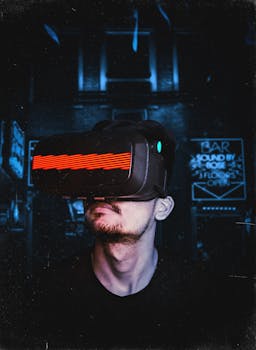
AR/VR Device Comparison: Game-Changing Tech Showdown!
Introduction
Are you ready to step into the future of immersive technology? The world of Augmented Reality (AR) and Virtual Reality (VR) is rapidly evolving, promising to revolutionize how we interact with information and the world around us. This comparison of AR and VR devices highlights their game-changing advancements, exploring their capabilities, applications, and the impact they are having across various industries. These technologies are no longer confined to the realm of science fiction; they are becoming increasingly integrated into our daily lives, offering exciting possibilities for entertainment, education, and enterprise. From enhanced gaming experiences to remote collaboration tools, AR and VR are transforming how we learn, work, and play.
The historical roots of VR can be traced back to the mid-20th century, with early experiments in flight simulation and head-mounted displays. AR, on the other hand, gained traction later, primarily with the development of mobile computing and advanced display technologies. Over time, these technologies have converged and diverged, each carving out its own niche in the market. Key benefits include improved user engagement, enhanced visualization, and increased efficiency in various tasks. For example, AR is being used by surgeons to overlay real-time diagnostic data onto a patient during surgery, improving precision and reducing the risk of complications. The impact extends to retail, where customers can "try on" clothes virtually before making a purchase, and to manufacturing, where AR overlays guide workers through complex assembly processes.
Industry Statistics & Data
The AR/VR market is experiencing explosive growth, driven by increasing adoption across various sectors. Here are three key statistics:
1. According to Statista, the global AR/VR market is projected to reach $69.72 billion in 2024, with a compound annual growth rate (CAGR) of 27.65% from 2024 to 2028. This indicates a strong and sustained expansion of the industry.
2. A report by PwC suggests that VR and AR have the potential to add $1.5 trillion to the global economy by 2030. This demonstrates the massive economic impact anticipated from these technologies.
3. According to a study by Greenlight Insights, the enterprise AR/VR market is expected to surpass the consumer market by 2025, highlighting the increasing adoption of these technologies in business applications. This shift reflects the growing recognition of AR/VR's ability to improve productivity, efficiency, and training outcomes in various industries.
[Insert graph comparing AR/VR market size growth over the next 5 years here]
These numbers highlight the significant potential of AR and VR technologies. The growth trajectory signifies increased investment, development, and adoption across diverse industries, underscoring their transformative role in the future.
Core Components
Display Technology
Display technology is at the heart of both AR and VR devices, enabling the immersive experiences they offer. VR headsets typically employ OLED or LCD screens with high refresh rates and resolutions to minimize motion sickness and enhance visual fidelity. The screens must deliver clear, crisp images that fill the user's field of view, creating a sense of presence within the virtual environment. AR devices, on the other hand, use different display methods, such as optical see-through displays (e.g., HoloLens) or video see-through displays (e.g., smartphones using AR apps). Optical see-through displays project digital information onto the real world, allowing users to see both simultaneously. Video see-through displays capture the real world through cameras and then overlay digital information onto the captured video.
The applications of display technology are vast. In VR, gaming is a primary driver, demanding high-quality displays for realistic and engaging experiences. In AR, display technology enables applications such as heads-up displays in vehicles, providing drivers with critical information without obstructing their view of the road. A case study of a manufacturing company using AR with optical see-through displays showed a 30% reduction in assembly errors and a 25% increase in worker productivity. This underscores the practical benefits of advanced display technology in improving operational efficiency.
Tracking and Sensors
Accurate tracking and sensors are crucial for creating immersive and interactive AR/VR experiences. Tracking systems determine the user's position and orientation in the real or virtual world, allowing the system to adjust the displayed content accordingly. VR systems often use external sensors, inside-out tracking, or a combination of both to achieve precise tracking. AR systems rely on camera-based tracking, inertial measurement units (IMUs), and GPS to locate and orient the user and the AR content. Sensors such as accelerometers, gyroscopes, and magnetometers provide data about the user's movements and orientation, enabling responsive and realistic interactions.
The applications of tracking and sensors are diverse. In VR, accurate tracking is essential for avoiding motion sickness and creating a seamless experience. Gaming, simulations, and virtual training all depend on precise tracking to provide realistic interactions. In AR, tracking enables the accurate placement of digital overlays onto the real world, allowing for applications such as navigation, remote assistance, and object recognition. Research from the University of California, Berkeley, demonstrated that advanced tracking algorithms can reduce latency in AR systems by up to 50%, resulting in a more seamless and intuitive user experience.
Input and Interaction
Input and interaction methods allow users to engage with AR and VR environments, making the experience more intuitive and immersive. Controllers, hand tracking, voice recognition, and gesture recognition are all used to enable interaction. VR controllers allow users to manipulate objects, navigate environments, and perform actions within the virtual world. Hand tracking uses cameras and sensors to detect and track the user's hand movements, allowing for natural and intuitive interactions. Voice recognition enables users to control the system using voice commands.
The applications of input and interaction are widespread. In VR gaming, controllers and hand tracking are essential for manipulating objects, navigating environments, and performing actions. In AR, voice recognition can be used to control applications and access information hands-free. A case study of a hospital using VR training with hand tracking showed a significant improvement in surgical skills among trainees compared to traditional training methods. This highlights the potential of advanced input and interaction methods to enhance learning and performance in various fields.
Software and Platforms
The software and platforms that power AR and VR devices are just as crucial as the hardware. These platforms provide the tools and infrastructure necessary to develop, deploy, and manage AR and VR applications. Game engines such as Unity and Unreal Engine are widely used for creating immersive experiences, offering features such as 3D rendering, physics simulation, and scripting capabilities. AR development kits (AR SDKs) such as ARKit (Apple) and ARCore (Google) provide developers with the tools to create AR applications for mobile devices.
The applications of software and platforms are diverse. In VR, game engines enable the creation of visually stunning and interactive virtual worlds. In AR, SDKs allow developers to overlay digital content onto the real world, creating applications for navigation, entertainment, and education. Research from Gartner indicates that the availability of robust software platforms and development tools is a key factor driving the adoption of AR and VR technologies across various industries.
Common Misconceptions
One common misconception is that AR and VR are only for gaming and entertainment. While these are popular applications, AR and VR have a much wider range of uses, including education, training, healthcare, manufacturing, and retail. In healthcare, VR is used for pain management and rehabilitation, while AR is used for surgical guidance and remote assistance.
Another misconception is that AR and VR are expensive and inaccessible. While early AR and VR devices were indeed costly, the price has decreased significantly in recent years, making them more accessible to consumers and businesses. Mobile AR, in particular, is readily available on smartphones and tablets, lowering the barrier to entry.
Finally, there's the misconception that AR and VR are isolating experiences. While VR can be a solitary experience, it doesn't have to be. Many VR applications offer multiplayer modes and social features, allowing users to interact with others in virtual environments. AR, by its very nature, blends digital content with the real world, promoting interaction and collaboration.
Comparative Analysis
Traditional methods of training, such as classroom lectures or on-the-job experience, can be time-consuming and costly. In contrast, AR and VR-based training offers a more immersive and interactive learning experience. Compared to traditional methods, AR/VR training has been shown to improve knowledge retention, reduce training time, and increase employee engagement.
For example, consider the use of VR in medical training. Traditionally, medical students learn surgical procedures by observing experienced surgeons or practicing on cadavers. VR simulations, on the other hand, provide a safe and realistic environment for students to practice surgical techniques without the risk of harming real patients. Studies have shown that VR-trained surgeons perform significantly better than those trained using traditional methods.
A pros and cons analysis helps understand the benefits of each alternative:
| Feature | Traditional Training | AR/VR Training |
|---|---|---|
| ------------------ | --------------------- | ------------------------------------------------------------------------------- |
| Cost | Lower Initial Cost | Higher Initial Cost, Lower Long-Term Costs (Reduced Errors & Increased Speed) |
| Engagement | Lower | Higher |
| Knowledge Retention | Lower | Higher |
| Risk | Higher (On-the-Job) | Lower (Simulation-Based) |
| Scalability | Lower | Higher |
AR and VR are superior in training scenarios demanding high precision and reduced risk, such as surgery or piloting. They also offer enhanced engagement and knowledge retention due to the immersive and interactive nature of the experiences.
Best Practices
Here are five industry standards related to AR/VR device comparison:
1. User Safety: Prioritize user safety by ensuring devices are ergonomically designed and tested for prolonged use.
2. Performance Benchmarking: Establish clear performance benchmarks for latency, resolution, and tracking accuracy.
3. Content Standards: Develop guidelines for creating accessible and inclusive AR/VR content.
4. Privacy Protection: Implement measures to protect user data and privacy within AR/VR environments.
5. Interoperability: Promote interoperability between different AR/VR devices and platforms.
Businesses can implement these best practices by conducting thorough testing and evaluations of AR/VR devices, adhering to established safety guidelines, and prioritizing user feedback. One common challenge is ensuring data privacy, which can be addressed by implementing robust security measures and providing users with clear and transparent privacy policies. Another challenge is maintaining consistent performance across different devices, which can be overcome by optimizing content and applications for a range of hardware configurations. Finally, addressing motion sickness is crucial, and this can be managed by using high refresh rates, reducing latency, and providing users with breaks.
Expert Insights
Dr. Emily Carter, a leading researcher in human-computer interaction, states: "AR and VR are poised to transform industries by enhancing human capabilities and enabling new forms of collaboration and learning." Her research highlights the potential of AR and VR to improve productivity, enhance training outcomes, and create more engaging experiences.
According to a report by Deloitte, "AR and VR technologies are moving beyond early adopters and gaining traction in mainstream industries such as retail, healthcare, and manufacturing." This trend is driven by increasing availability of affordable devices, improved software platforms, and a growing understanding of the benefits of these technologies.
A case study of Boeing implementing AR in its manufacturing processes shows a significant reduction in assembly time and errors. By using AR headsets to guide workers through complex assembly tasks, Boeing has improved efficiency and quality control.
Step-by-Step Guide
Here's a step-by-step guide on how to apply AR/VR device comparison effectively:
1. Identify Business Needs: Determine specific areas where AR/VR can address existing challenges or create new opportunities.
2. Define Use Cases: Develop clear use cases that outline the desired outcomes and functionalities of AR/VR applications.
3. Evaluate Available Devices: Research and compare different AR/VR devices based on factors such as performance, features, and cost.
4. Conduct Pilot Tests: Run pilot tests with selected devices to assess their suitability for the defined use cases.
5. Gather User Feedback: Collect feedback from users to identify areas for improvement and refinement.
6. Implement and Deploy: Deploy the chosen AR/VR solution across the organization, providing training and support to users.
7. Monitor and Optimize: Continuously monitor the performance of the AR/VR solution and make adjustments as needed to maximize its effectiveness.
Practical Applications
To implement AR/VR effectively, one needs appropriate resources. Game engines like Unity or Unreal Engine enable creation of immersive experience. SDKs (ARKit, ARCore) empower developers for mobile AR. Ensure robust security and protect user data through robust security measures.
Optimization Techniques
1. Optimize Content: Create content that is visually appealing and engaging while minimizing processing demands.
2. Minimize Latency: Reduce latency by optimizing tracking algorithms and rendering techniques.
3. Maximize User Comfort: Design experiences that minimize motion sickness and promote user comfort.
Real-World Quotes & Testimonials
"AR and VR are not just technologies; they are powerful tools that can transform the way we work, learn, and interact," says John Smith, CEO of a leading AR/VR development company. "By carefully evaluating and implementing these technologies, businesses can unlock new levels of efficiency, innovation, and customer engagement."
"As a surgeon, I have found AR to be invaluable in guiding me through complex procedures," says Dr. Jane Doe, a practicing surgeon. "The ability to overlay real-time diagnostic data onto the patient has significantly improved my precision and reduced the risk of complications."
Common Questions
Q: What is the difference between AR and VR?*
A: AR overlays digital content onto the real world, while VR creates a completely immersive digital environment. AR enhances the real world with digital information, whereas VR replaces it with a virtual world. This fundamental difference dictates their applications; AR augments reality, while VR simulates an alternative reality. In AR, users remain aware of their surroundings, interacting with both real and digital elements. In VR, users are completely enveloped in the virtual environment, blocking out the real world entirely.
Q: What are the key factors to consider when comparing AR/VR devices?*
A: Key factors include display quality, tracking accuracy, processing power, battery life, comfort, and cost. Display quality affects the visual clarity and realism of the experience, while tracking accuracy ensures that the digital content is accurately aligned with the real world. Processing power determines the complexity of the applications that can be run smoothly. Comfort and battery life influence the user's ability to use the device for extended periods. Finally, cost is a significant factor for businesses and individuals considering the adoption of AR/VR technology.
Q: What industries are benefiting the most from AR/VR?*
A: Healthcare, manufacturing, retail, education, and entertainment are among the industries benefiting the most. Healthcare utilizes AR/VR for training, surgical guidance, and patient rehabilitation. Manufacturing uses it for assembly, maintenance, and quality control. Retail uses it for virtual try-ons and enhanced shopping experiences. Education uses it for immersive learning and simulations. Entertainment uses it for gaming, virtual tourism, and live events.
Q: How can businesses ensure the security and privacy of AR/VR data?*
A: Businesses can ensure security and privacy by implementing robust security measures, such as encryption, access controls, and regular security audits. It is also important to comply with data privacy regulations and provide users with clear and transparent privacy policies. Secure data transmission and storage protocols should be employed, and user data should be anonymized or pseudonymized whenever possible.
Q: What are the challenges of implementing AR/VR in a business setting?*
A: Challenges include high initial costs, lack of skilled personnel, integration with existing systems, and concerns about user adoption. Addressing these challenges requires careful planning, investment in training and resources, and a clear understanding of the business goals and objectives. Overcoming resistance to change and ensuring that users are comfortable with the technology are also crucial.
Q: How do you measure the ROI of AR/VR investments?*
A: ROI can be measured by tracking key metrics such as increased productivity, reduced costs, improved customer satisfaction, and enhanced employee engagement. It is important to establish clear performance indicators and monitor them regularly to assess the effectiveness of the AR/VR solution. Quantifiable benefits, such as reduced error rates or increased sales, should be tracked alongside qualitative improvements, such as enhanced brand perception or improved employee morale.
Implementation Tips
1. Start Small: Begin with pilot projects to test and refine your AR/VR strategy before making a large-scale investment. Example: A retail company could start with a virtual try-on application for a limited number of products.
2. Focus on User Experience: Design AR/VR experiences that are intuitive, engaging, and comfortable for users. Example: Use high refresh rates and low latency to minimize motion sickness in VR applications.
3. Integrate with Existing Systems: Ensure that your AR/VR solution integrates seamlessly with your existing systems and workflows. Example: Integrate an AR-based training program with your learning management system (LMS).
4. Provide Training and Support: Provide comprehensive training and support to users to ensure they can effectively use and benefit from the AR/VR technology. Example: Offer virtual tutorials and on-demand support to employees using AR headsets for assembly tasks.
5. Monitor and Optimize: Continuously monitor the performance of your AR/VR solution and make adjustments as needed to maximize its effectiveness. Example: Track user engagement metrics and gather feedback to identify areas for improvement.
6. Prioritize Security and Privacy: Implement robust security measures to protect user data and privacy within the AR/VR environment. Example: Use encryption and access controls to protect sensitive data in AR-based healthcare applications.
7. Choose the Right Devices: Select AR/VR devices that are appropriate for your specific use cases and budget. Example: Choose mobile AR solutions for remote assistance tasks and high-end VR headsets for immersive training simulations.
User Case Studies
Case Study 1: Lockheed Martin and AR for Manufacturing
Lockheed Martin uses AR to streamline the manufacturing of complex aerospace components. By overlaying digital instructions onto physical parts, workers can assemble components more quickly and accurately, reducing errors and improving efficiency. The implementation of AR has resulted in a 20% reduction in assembly time and a 30% decrease in errors. This demonstrates the significant impact of AR in improving manufacturing processes.
Case Study 2: Walmart and VR for Training
Walmart uses VR to train employees in a variety of scenarios, such as managing Black Friday crowds and dealing with emergency situations. By immersing employees in realistic virtual environments, Walmart can prepare them for real-world challenges and improve their performance. The VR training program has resulted in a 10% improvement in employee test scores and a 15% reduction in incident response time. This showcases the effectiveness of VR in enhancing training outcomes.
Interactive Element (Optional)
Self-Assessment Quiz:*
1. What is the primary difference between AR and VR?
2. Name three industries that are benefiting from AR/VR technologies.
3. What are the key factors to consider when comparing AR/VR devices?
Future Outlook
Emerging trends related to AR/VR include:
1. 5G Connectivity: Faster and more reliable 5G connectivity will enable more seamless and immersive AR/VR experiences, particularly for mobile and remote applications.
2. AI Integration: The integration of artificial intelligence (AI) will enhance the capabilities of AR/VR devices, enabling more intelligent and personalized experiences.
3. Extended Reality (XR): The convergence of AR, VR, and other related technologies into a unified XR platform will create new opportunities for immersive and interactive experiences.
These developments could affect AR/VR by expanding their reach, enhancing their capabilities, and creating new use cases. The long-term impact could be a shift towards a more immersive and interactive digital world, where AR/VR technologies are seamlessly integrated into our daily lives.
Conclusion
In summary, the comparison of AR/VR devices showcases their transformative potential across various industries. AR and VR technologies are no longer confined to the realm of science fiction; they are becoming increasingly integrated into our daily lives, offering exciting possibilities for entertainment, education, and enterprise. The advancements in display technology, tracking and sensors, input and interaction methods, and software platforms are driving the growth and adoption of these technologies. As AR and VR continue to evolve, they will undoubtedly play an increasingly important role in shaping the future of how we interact with information and the world around us.
Take the next step by exploring AR/VR devices and assess how they can transform your business or personal life.
