
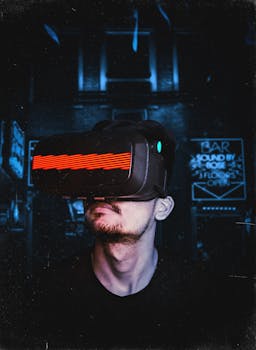
AR/VR: Game-Changing Tech? Explore the Advancements & Impact
Introduction
Are you ready to step into a world where the digital and physical realms blur? The rise of Augmented Reality (AR) and Virtual Reality (VR) devices is no longer a futuristic fantasy, but a tangible revolution transforming industries and reshaping daily life. But why are AR/VR devices considered game-changing advancements? This article delves into the core components, applications, and potential of AR/VR, exploring their impact across various sectors and addressing common misconceptions along the way. The importance of AR/VR lies in their ability to create immersive, interactive experiences that enhance productivity, learning, and entertainment. Historically, VR emerged in the mid-20th century with rudimentary head-mounted displays, while AR's development gained traction with the advancement of mobile technology. Today, these technologies offer benefits ranging from improved training simulations for surgeons to enhanced shopping experiences for consumers. Consider, for instance, the use of AR in IKEA's Place app, allowing customers to visualize furniture in their homes before making a purchase. This application alone demonstrates the power of AR/VR to bridge the gap between the digital and physical worlds, creating a more informed and satisfying consumer experience.
Industry Statistics & Data
The growth trajectory of the AR/VR market is undeniably impressive, supported by substantial investment and increasing adoption across various sectors. Here are some key industry statistics:
1. According to a report by Statista, the global augmented reality (AR) and virtual reality (VR) market is projected to reach $69.52 billion in 2024 and is expected to show an annual growth rate (CAGR 2024-2029) of 21.27%, resulting in a projected market volume of $182.19 billion by 2029. This indicates the immense potential for future expansion and adoption. (Source: Statista, 2024)
2. A study by PwC estimates that VR/AR technologies could add $1.5 trillion to the global economy by 2030. This highlights the significant economic impact these technologies are expected to have in the coming years. (Source: PwC, 2020)
3. According to research by IDC, worldwide spending on augmented and virtual reality is forecast to reach $26.7 billion in 2021, an increase of 54% over the previous year. This demonstrates the rapidly increasing investment in AR/VR technology across different industries. (Source: IDC, 2021)
These numbers paint a clear picture: the AR/VR market is experiencing exponential growth and holds significant economic potential. This growth is driven by increasing demand across various sectors, from gaming and entertainment to healthcare and education, indicating a widespread belief in the transformative capabilities of these technologies.
Core Components
Several core components underpin the functionality and impact of AR/VR devices, making them the game-changing advancements they are touted to be:
Displays and Sensors
At the heart of any AR/VR device lies its display technology. VR headsets typically employ OLED or LCD screens to create immersive visuals that fill the user's field of view. AR devices, on the other hand, use transparent displays or projection systems to overlay digital information onto the real world. Sensors play an equally crucial role, tracking the user's movements and orientation to ensure that the virtual or augmented environment responds accordingly. These sensors include accelerometers, gyroscopes, magnetometers, and cameras. Precise and accurate tracking is essential for creating a seamless and believable experience. For example, in VR gaming, accurate head tracking allows the player to look around the virtual environment naturally, enhancing the sense of immersion. In AR applications, accurate object recognition allows for precise placement of digital overlays, such as displaying product information when pointing a smartphone camera at a specific item. Case studies in manufacturing show that using AR glasses with integrated sensors can significantly improve assembly line efficiency by providing workers with real-time instructions and quality control data overlaid directly onto their work environment.
Processing Power
Creating realistic and responsive AR/VR experiences requires significant processing power. The devices must be capable of rendering complex 3D environments, processing sensor data in real-time, and handling user input with minimal latency. This is typically achieved through a combination of powerful processors, graphics processing units (GPUs), and specialized algorithms. The demand for processing power is particularly acute in VR, where high frame rates and resolutions are necessary to avoid motion sickness and create a truly immersive experience. AR applications, while often less computationally intensive than VR, still require sufficient processing power to handle object recognition, tracking, and the seamless integration of digital content with the real world. Advancements in mobile processors and cloud computing are paving the way for more powerful and affordable AR/VR devices. Research indicates that edge computing, where processing is performed closer to the user device, can significantly reduce latency and improve the overall performance of AR/VR applications.
Software and Content
Hardware alone is not enough to create compelling AR/VR experiences; software and content are equally critical. Software development kits (SDKs) provide developers with the tools and libraries needed to create AR/VR applications. These SDKs typically include features for rendering 3D graphics, handling user input, managing sensor data, and integrating with other services. The quality and availability of content play a crucial role in driving adoption. A wide range of AR/VR applications is emerging, spanning gaming, entertainment, education, healthcare, and enterprise. For example, medical students can use VR simulations to practice complex surgical procedures, while architects can use AR to visualize building designs in real-world environments. The success of AR/VR hinges on the creation of engaging, informative, and useful content that addresses the needs of specific users and industries. Case studies in education have shown that VR-based learning experiences can improve student engagement and knowledge retention compared to traditional teaching methods.
Common Misconceptions
Despite the growing popularity and potential of AR/VR, several misconceptions persist, hindering wider adoption and understanding:
1. Misconception: AR/VR is just for gaming and entertainment. While gaming and entertainment are prominent applications, AR/VR's potential extends far beyond these areas. In healthcare, VR is used for surgical training and pain management. In manufacturing, AR assists with assembly and quality control. In education, VR offers immersive learning experiences. The reality is that AR/VR has diverse applications across numerous industries, addressing real-world challenges and improving efficiency.
2. Misconception: AR/VR is too expensive and inaccessible. While high-end VR systems can be costly, the price of AR/VR technology has been steadily decreasing. Affordable smartphone-based AR applications are readily available, and entry-level VR headsets are becoming increasingly accessible. Furthermore, the long-term return on investment in AR/VR, through increased productivity, improved training, and enhanced customer experiences, often outweighs the initial cost.
3. Misconception: AR/VR is isolating and unhealthy. Concerns about social isolation and potential health risks are often raised. However, AR/VR experiences can be social and collaborative, connecting people in virtual environments for shared activities. Furthermore, developers are increasingly focusing on ergonomic design and health and safety guidelines to minimize potential risks such as motion sickness and eye strain.
Comparative Analysis
Compared to traditional methods, AR/VR offers unique advantages in various applications.
Consider traditional training versus VR simulations. Traditional training often relies on theoretical instruction and limited hands-on experience. VR simulations, on the other hand, provide immersive, risk-free environments where trainees can practice complex procedures and develop critical skills. While traditional training may be more cost-effective in some cases, VR simulations offer a more engaging and effective learning experience.
Another comparison is between traditional marketing and AR-enhanced shopping experiences. Traditional marketing often relies on static images and text to convey product information. AR allows customers to virtually try on clothes, visualize furniture in their homes, and interact with products in a more engaging way. While traditional marketing may reach a wider audience, AR-enhanced shopping experiences offer a more personalized and interactive experience, potentially leading to higher conversion rates.
Pros and Cons Analysis:*
| Feature | Traditional Methods | AR/VR Technologies |
|---|---|---|
| ------------------- | ----------------------------------------------------- | --------------------------------------------------- |
| Cost | Lower initial cost | Higher initial cost |
| Engagement | Lower engagement | Higher engagement |
| Immersion | Limited immersion | High immersion |
| Accessibility | Wide accessibility | Variable accessibility |
| Effectiveness | Potentially lower effectiveness in certain contexts | Potentially higher effectiveness in certain contexts |
In situations where immersive, interactive experiences are crucial for training, marketing, or education, AR/VR often provides a superior solution compared to traditional methods.
Best Practices
Implementing AR/VR effectively requires adherence to industry best practices. Here are five key standards:
1. Prioritize User Experience: Focus on creating intuitive and engaging user interfaces that minimize cognitive load and maximize user comfort.
2. Optimize Performance: Ensure smooth and responsive performance by optimizing graphics, minimizing latency, and using efficient algorithms.
3. Adhere to Safety Guidelines: Follow established health and safety guidelines to minimize potential risks such as motion sickness, eye strain, and physical discomfort.
4. Protect User Privacy: Implement robust data security measures to protect user privacy and comply with relevant regulations.
5. Iterate and Refine: Continuously gather user feedback and iterate on designs to improve the overall AR/VR experience.
Common Challenges and Solutions:*
1. Challenge: Overcoming motion sickness. Solution: Optimize frame rates, reduce latency, and provide visual cues to help users maintain their sense of balance.
2. Challenge: Ensuring compatibility across different devices. Solution: Develop AR/VR applications using cross-platform frameworks and test thoroughly on a range of devices.
3. Challenge: Protecting user privacy. Solution: Implement robust data encryption and anonymization techniques and obtain explicit user consent for data collection.
Expert Insights
"AR and VR are not just about flashy demos; they are about fundamentally changing how we interact with information and the world around us," says Cathy Hackl, a renowned tech futurist and metaverse expert. "Businesses that embrace these technologies strategically will gain a significant competitive advantage."
Research from Stanford University's Virtual Human Interaction Lab has shown that VR experiences can have a lasting impact on users' attitudes and behaviors in the real world. This highlights the importance of designing AR/VR applications responsibly and ethically. A case study from Boeing demonstrates how AR has significantly reduced assembly time and improved quality control in their manufacturing processes, resulting in substantial cost savings.
Step-by-Step Guide
Here's a step-by-step guide to implementing AR/VR effectively:
1. Define Clear Objectives: Identify specific goals and outcomes you want to achieve with AR/VR.
2. Choose the Right Technology: Select the AR/VR platform and devices that best suit your needs and budget.
3. Develop a Detailed Plan: Create a comprehensive plan that outlines the development process, resource allocation, and evaluation metrics.
4. Design User-Friendly Experiences: Prioritize user experience and create intuitive and engaging interfaces.
5. Test and Iterate: Thoroughly test your AR/VR application and iterate on the design based on user feedback.
6. Train Users: Provide adequate training to ensure that users can effectively use the AR/VR application.
7. Evaluate Results: Track key metrics and evaluate the results of your AR/VR implementation to identify areas for improvement.
Practical Applications
To implement AR/VR effectively, consider these steps:
1. Identify a Problem: Choose a specific problem or opportunity where AR/VR can provide a tangible benefit.
2. Select the Right Tools: Select an appropriate SDK (e.g., Unity, ARKit, ARCore) and development environment.
3. Design the Experience: Plan the user flow, interactions, and visual elements of your AR/VR application.
Optimization Techniques:*
1. Optimize Graphics: Use low-poly models, texture compression, and other techniques to reduce the computational load.
2. Minimize Latency: Implement asynchronous processing and optimize network communication to reduce latency.
3. Prioritize User Comfort: Design experiences that minimize motion sickness and eye strain.
Real-World Quotes & Testimonials
"AR is going to change how we use technology and how we perceive the world. It's the next big computing platform," says Tim Cook, CEO of Apple.
"VR is not just a gimmick; it's a powerful tool for training, education, and communication. It has the potential to transform industries and improve lives," states Dr. Brenda Laurel, a VR pioneer and researcher.
Common Questions
Q: What are the key differences between AR and VR?*
A: AR overlays digital information onto the real world, while VR creates a completely immersive digital environment. AR enhances the real world with digital elements, whereas VR replaces the real world entirely with a virtual one. This difference impacts the hardware and software requirements, as well as the potential applications for each technology.
Q: What are the potential health risks associated with AR/VR?*
A: Potential health risks include motion sickness, eye strain, and physical discomfort. These risks can be minimized by optimizing frame rates, reducing latency, designing ergonomic devices, and providing appropriate training and guidelines for users. Responsible design and implementation are crucial for ensuring user safety and comfort.
Q: How can businesses get started with AR/VR?*
A: Businesses can start by identifying specific problems or opportunities where AR/VR can provide a tangible benefit. They should then choose the right technology, develop a detailed plan, design user-friendly experiences, test and iterate, train users, and evaluate results. A phased approach, starting with small-scale pilot projects, is often the most effective way to learn and adapt.
Q: What are the future trends in AR/VR?*
A: Future trends include advancements in display technology, improved sensor accuracy, greater processing power, and increased adoption across various industries. The metaverse, which combines AR/VR with social networking and e-commerce, is also expected to play a significant role in the future of AR/VR.
Q: How can AR/VR be used in education?*
A: AR/VR can be used to create immersive learning experiences, allowing students to explore historical sites, dissect virtual organisms, and practice complex procedures in a risk-free environment. These experiences can improve student engagement, knowledge retention, and overall learning outcomes.
Q: What are the ethical considerations surrounding AR/VR?*
A: Ethical considerations include privacy concerns, the potential for addiction, and the impact on social interaction. It is important to develop AR/VR applications responsibly and ethically, ensuring user privacy, promoting responsible use, and mitigating potential negative consequences.
Implementation Tips
1. Start Small: Begin with a pilot project to test the feasibility and effectiveness of AR/VR in your specific context.
2. Focus on User Needs: Prioritize user needs and create experiences that are relevant, engaging, and useful.
3. Iterate and Refine: Continuously gather user feedback and iterate on your designs to improve the overall AR/VR experience.
4. Invest in Training: Provide adequate training to ensure that users can effectively use the AR/VR application.
5. Measure Results: Track key metrics and evaluate the results of your AR/VR implementation to identify areas for improvement.
User Case Studies
Case Study 1: Manufacturing*
Lockheed Martin uses AR to guide technicians in assembling complex aircraft components. This has resulted in a significant reduction in assembly time and improved accuracy. The AR system provides step-by-step instructions, visual cues, and real-time feedback, allowing technicians to work more efficiently and effectively.
Case Study 2: Healthcare*
Surgical Theater uses VR to create 3D models of patients' brains, allowing surgeons to plan and practice complex procedures in a virtual environment. This has resulted in improved surgical outcomes and reduced complications. The VR models provide surgeons with a detailed understanding of the patient's anatomy, allowing them to make more informed decisions during surgery.
Future Outlook
Emerging trends in AR/VR include:
1. Advancements in Display Technology: New display technologies, such as holographic displays and retinal projection, promise to create more immersive and realistic AR/VR experiences.
2. Improved Sensor Accuracy: Advancements in sensor technology are leading to more accurate tracking and gesture recognition, allowing for more natural and intuitive interactions.
3. Integration with AI: The integration of artificial intelligence with AR/VR is enabling new capabilities such as personalized content recommendations, intelligent assistants, and real-time object recognition.
The long-term impact of AR/VR is expected to be transformative, impacting various industries and reshaping how we live, work, and interact with the world. The rise of the metaverse, which combines AR/VR with social networking and e-commerce, has the potential to create new economic opportunities and transform social interactions.
Conclusion
AR/VR devices represent game-changing advancements with the potential to transform industries and reshape daily life. From immersive training simulations to enhanced shopping experiences, AR/VR offers unique advantages over traditional methods. By addressing common misconceptions, adhering to best practices, and embracing emerging trends, businesses and individuals can harness the power of AR/VR to achieve significant results. The future of AR/VR is bright, with continued advancements in technology and increasing adoption across various sectors. Take the next step and explore how AR/VR can benefit your organization or enhance your personal life.
