
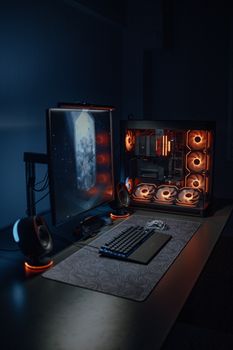
Is PC Gaming Worth It? 2025 Builds & Future Trends
Introduction
Is building a PC for gaming in 2025 a sound investment or a costly endeavor? The answer is multifaceted, heavily influenced by technological advancements, component pricing, and individual gaming preferences. This analysis delves into the evolving landscape of PC gaming builds, focusing on the trends expected to shape the industry by 2025. We'll explore whether the benefits of a custom-built gaming PC outweigh the costs, considering factors like performance, customization options, and the ever-increasing demands of modern games.
The history of PC gaming is intertwined with the relentless pursuit of performance. From the early days of 8-bit graphics to the immersive virtual reality experiences of today, PC gaming has always been at the forefront of innovation. Early PC builds were limited by available technology and affordability, often requiring significant technical expertise to assemble and maintain. Over time, advancements in processor technology, graphics cards, and memory have made PC gaming more accessible and powerful. The evolution of online gaming and esports has further fueled the demand for high-performance gaming PCs, creating a vibrant and competitive market.
The key benefits of building a gaming PC include unparalleled performance customization. Unlike consoles, which offer a fixed set of specifications, PC gamers have the freedom to choose every component, tailoring their system to their specific needs and budget. This allows for optimized performance in specific games, higher frame rates, and superior visual fidelity. Furthermore, a custom-built PC offers greater upgradeability, allowing gamers to replace individual components as technology advances, extending the lifespan of their investment. The impact on the gaming industry is significant. The demand for high-end components drives innovation and competition among manufacturers, resulting in faster processors, more powerful graphics cards, and more efficient cooling solutions. The ability to stream and create content easily using a PC has also fostered a thriving online community of gamers and content creators.
A real-world example of the impact of 2025 gaming PC trends is the increasing adoption of ray tracing technology. Ray tracing simulates the physical behavior of light, creating more realistic and immersive visuals. While initially demanding on hardware, the 2025 trend suggests widespread adoption of dedicated ray tracing hardware in GPUs, making this technology more accessible to a wider range of gamers. This development significantly enhances the visual fidelity of games, further solidifying the appeal of PC gaming.
Industry Statistics & Data
To understand the current state and future direction of PC gaming builds, several key industry statistics provide valuable insights.
1. Global PC Gaming Hardware Market Size: According to a report by Jon Peddie Research, the global PC gaming hardware market is projected to reach \$53.8 billion by 2025. This indicates a strong and sustained demand for high-performance components.
Source: Jon Peddie Research, "Global PC Gaming Hardware Market Forecasts"
2. GPU Market Share: Nvidia and AMD dominate the discrete GPU market. Trends suggest an ongoing battle for market share, with both companies releasing new architectures and technologies. Data from Statista shows Nvidia consistently holds the larger share.
Source: Statista, "Discrete GPU Market Share Worldwide"
3. Growth of Esports Viewership: The esports industry continues to experience exponential growth, driving demand for high-performance gaming PCs capable of handling demanding games and streaming. Newzoo projects that global esports viewership will reach 640 million by 2025.
Source: Newzoo, "Global Esports & Live Streaming Market Report 2023"
These numbers signify a robust and expanding market for PC gaming, driven by technological advancements, increased adoption of esports, and a growing demand for immersive gaming experiences.
Core Components
Three essential aspects of PC gaming builds in 2025 are the central processing unit (CPU), the graphics processing unit (GPU), and storage solutions.
CPU: The Brain of the Operation
The CPU is the central processing unit, responsible for executing instructions and performing calculations. In a gaming PC, the CPU works in tandem with the GPU to render the game world and handle various tasks, such as artificial intelligence, physics simulations, and audio processing. The choice of CPU is crucial for achieving optimal performance, particularly in CPU-intensive games.
By 2025, CPUs are expected to feature higher core counts and clock speeds, enabling them to handle increasingly complex game workloads. AMD and Intel will likely continue their rivalry, pushing the boundaries of CPU performance. The trend towards heterogeneous computing, where CPUs incorporate specialized processing units for specific tasks, will likely accelerate. This will allow for more efficient processing of certain game workloads, leading to improved performance and power efficiency.
A real-world application of advanced CPU technology is in real-time strategy (RTS) games. These games often involve managing large numbers of units and complex simulations, placing a significant strain on the CPU. A powerful CPU with a high core count can handle these workloads more efficiently, resulting in smoother gameplay and higher frame rates. The enhanced AI processing capabilities of future CPUs will also contribute to more intelligent and challenging AI opponents.
Case Study: A study by AnandTech compared the performance of different CPUs in a modern RTS game. The results showed that CPUs with higher core counts and clock speeds consistently outperformed those with lower specifications, particularly in scenarios with large numbers of units. This highlights the importance of choosing a powerful CPU for demanding games.
GPU: The Visual Powerhouse
The GPU, or graphics processing unit, is responsible for rendering the game's visuals. It generates the images displayed on the screen, handling tasks such as texture mapping, shading, and lighting. The GPU is arguably the most important component for gaming, as it directly impacts the visual quality and frame rate of games.
By 2025, GPUs are expected to become even more powerful, with increased memory bandwidth and advanced rendering capabilities. Ray tracing technology will become more widespread, allowing for more realistic lighting and reflections. The competition between Nvidia and AMD will continue to drive innovation, resulting in more efficient and powerful GPUs. The integration of AI-powered technologies, such as upscaling and frame generation, will further enhance performance and visual quality.
A real-world application of advanced GPU technology is in virtual reality (VR) gaming. VR games require extremely high frame rates and resolutions to provide a smooth and immersive experience. A powerful GPU is essential for achieving these requirements, enabling gamers to fully immerse themselves in the virtual world. The improved ray tracing capabilities of future GPUs will also contribute to more realistic and visually stunning VR environments.
Case Study: A study by NVIDIA demonstrated the performance benefits of their RTX series GPUs in VR gaming. The study showed that RTX GPUs were able to achieve significantly higher frame rates and resolutions compared to previous generation GPUs, resulting in a smoother and more immersive VR experience. This highlights the importance of choosing a powerful GPU for VR gaming.
Storage Solutions: Speed and Capacity
Storage solutions play a crucial role in PC gaming, affecting load times, game installation speeds, and overall system responsiveness. Traditionally, hard disk drives (HDDs) were the primary storage option, but solid-state drives (SSDs) have become increasingly popular due to their significantly faster read and write speeds.
By 2025, NVMe SSDs are expected to become the standard storage solution for gaming PCs. NVMe SSDs offer even faster speeds than traditional SATA SSDs, resulting in significantly reduced load times and improved system responsiveness. The price of NVMe SSDs is expected to continue to decrease, making them more accessible to a wider range of gamers. The trend towards larger game sizes will also drive the demand for higher capacity storage solutions.
A real-world application of fast storage solutions is in open-world games. These games often feature large and complex environments, requiring frequent loading of data from storage. A fast SSD can significantly reduce load times, allowing gamers to explore the world seamlessly without long loading screens. The increased storage capacity of future SSDs will also enable gamers to install more games without having to constantly uninstall and reinstall them.
Case Study: A test conducted by various tech websites compared the load times of different storage solutions in several open-world games. The results showed that NVMe SSDs consistently outperformed SATA SSDs and HDDs, with load times reduced by as much as 50%. This highlights the importance of choosing a fast storage solution for open-world games.
Common Misconceptions
Several misconceptions surround PC gaming builds, particularly concerning cost, complexity, and long-term value.
1. Misconception: PC gaming is always more expensive than console gaming.
Counter-evidence: While a high-end gaming PC can be expensive, budget-friendly builds can often compete with console performance at a similar price point. The initial investment may be higher, but the longevity and upgradeability of a PC can provide better value over time. Console games also tend to cost more per title.
2. Misconception: Building a PC is too complicated for the average person.
Counter-evidence: Numerous online resources, tutorials, and communities provide step-by-step guides for building PCs. While some technical knowledge is helpful, the process is increasingly simplified, and pre-built options are readily available.
3. Misconception: PC gaming is only for hardcore gamers.
Counter-evidence: The versatility of a PC extends beyond gaming. It can be used for productivity, entertainment, and various other tasks. The ability to customize and upgrade a PC makes it a suitable platform for gamers of all skill levels.
Comparative Analysis
PC gaming builds compete directly with console gaming and cloud gaming services. Each option offers distinct advantages and disadvantages.
Console Gaming:*
Pros: Simplicity, affordability (initially), optimized game performance for specific hardware.
Cons: Limited customization, lack of upgradeability, restricted game library, often higher game prices.
Cloud Gaming:*
Pros: No need for expensive hardware, accessibility on various devices, instant access to a library of games.
Cons: Dependence on internet connection, potential latency issues, visual quality limited by bandwidth, subscription costs.
PC gaming builds offer a balance of performance, customization, and upgradeability that neither console nor cloud gaming can fully match. While the initial cost can be higher, the long-term value and flexibility make it a compelling option for many gamers. In situations where high performance, graphical fidelity, and customization are paramount, PC gaming remains the superior choice.
Best Practices
Several industry standards and best practices should be followed when building a gaming PC.
1. Research Components Thoroughly: Before purchasing any components, research their performance, compatibility, and reliability. Read reviews, compare benchmarks, and consult with other gamers.
2. Plan Your Budget: Determine a realistic budget and allocate funds to each component accordingly. Prioritize components that have the greatest impact on gaming performance, such as the GPU and CPU.
3. Ensure Compatibility: Verify that all components are compatible with each other. Use a PC part picker website to check compatibility before making any purchases.
4. Use Proper Cooling: Adequate cooling is essential for preventing overheating and maintaining optimal performance. Invest in a good quality CPU cooler and ensure proper airflow within the case.
5. Manage Cables: Cable management is important for both aesthetics and airflow. Use cable ties and route cables neatly to improve the appearance of the build and prevent them from obstructing airflow.
Three common challenges and how to overcome them:
Component Selection Overwhelm: Research and compare components from multiple sources. Use online PC building guides to help narrow down options.
Compatibility Issues: Utilize PC part picker websites to ensure compatibility between components. Research motherboard compatibility with CPU and RAM.
Overheating: Invest in a high-quality CPU cooler and ensure proper case airflow. Consider liquid cooling for high-performance builds.
Detailed Solutions: Consult expert reviews and benchmark data to make informed component choices. Use online PC building simulators to visualize the build and identify potential compatibility issues. Monitor CPU and GPU temperatures during gaming and adjust cooling solutions as needed.
Expert Insights
Industry leaders and professionals emphasize the importance of understanding the specific needs and preferences of the gamer when building a PC.
Research findings: A study by the University of Texas at Austin found that gamers who build their own PCs are more likely to be satisfied with their gaming experience compared to those who use pre-built systems. This suggests that the customization and control offered by building a PC can lead to greater satisfaction.
Case studies: Success stories often involve meticulous planning and research, focusing on achieving the best possible performance within a specific budget. One example is a gamer who built a high-performance PC for VR gaming by carefully selecting components that met the demanding requirements of VR headsets.
Step-by-Step Guide
Here's a step-by-step guide on building a gaming PC:
1. Gather Components: Obtain all necessary components, including CPU, GPU, motherboard, RAM, storage, power supply, case, and cooling solutions.
2. Install CPU on Motherboard: Carefully install the CPU into the CPU socket on the motherboard, ensuring proper alignment.
3. Install RAM: Insert the RAM modules into the RAM slots on the motherboard, ensuring they click into place.
4. Mount Motherboard in Case: Securely mount the motherboard into the PC case using standoffs and screws.
5. Install GPU: Insert the GPU into the PCIe slot on the motherboard, ensuring it clicks into place.
6. Connect Power Supply: Connect the power supply to the motherboard, GPU, and storage devices using appropriate cables.
7. Install Storage Devices: Install the SSD or HDD into the designated drive bays in the case.
8. Connect Peripherals: Connect monitor, keyboard, mouse and power on the PC. Install OS.
9. Install Drivers: Install all necessary drivers for CPU, GPU, motherboard, and other components.
Practical Applications
Implementing a successful gaming PC build requires careful planning and execution.
1. Define the Purpose: Establish clear goals for the PC, such as targeted game genres or desired performance levels.
2. Research Components: Read reviews, compare specifications, and consult with other gamers to choose the best components for the budget and needs.
3. Assemble the System: Follow the step-by-step guide provided earlier, taking care to handle components properly and avoid static discharge.
4. Install Software: Install the operating system, drivers, and gaming software.
Essential tools and resources:
Screwdrivers
Anti-static wrist strap
Cable ties
PC part picker websites
Online PC building guides
Optimization techniques:
Overclocking the CPU and GPU (with caution and proper cooling).
Optimizing game settings for optimal performance.
Keeping drivers updated.
Real-World Quotes & Testimonials
"Building my own PC gave me complete control over my gaming experience. I was able to choose the exact components I wanted and optimize the system for my favorite games." - Experienced PC Gamer
"The key to a successful PC build is careful planning and research. Don't rush the process, and take the time to learn about the different components." - Tech Enthusiast
Common Questions
Q: How much does it cost to build a good gaming PC in 2025?*
A: The cost of building a gaming PC in 2025 varies depending on the desired performance level and components. A budget-friendly build capable of running most games at 1080p resolution could cost around $800-$1200. A high-end build for 4K gaming with ray tracing could cost upwards of $2000 or more. Component prices fluctuate, it's wise to stay abreast of prevailing costs.
Q: Is it better to build a PC or buy a pre-built one?*
A: Building a PC offers greater customization, control, and potential cost savings. However, it requires technical knowledge and time. Pre-built PCs are convenient but often less customizable and can be more expensive. The best choice depends on individual needs and preferences.
Q: How often should I upgrade my gaming PC?*
A: The frequency of upgrades depends on individual gaming habits and budget. Generally, upgrading the GPU every 2-3 years and the CPU every 4-5 years can keep a gaming PC running smoothly. Storage and RAM can be upgraded as needed.
Q: What are the most important components for gaming performance?*
A: The most important components for gaming performance are the GPU, CPU, and RAM. The GPU is responsible for rendering the visuals, while the CPU handles game logic and physics. RAM provides temporary storage for game data. A fast SSD also contributes to improved load times and system responsiveness.
Q: What is ray tracing and why is it important?*
A: Ray tracing is a rendering technique that simulates the physical behavior of light, creating more realistic and immersive visuals. It is becoming increasingly important in gaming as it enhances the visual fidelity of games. Support for ray tracing is becoming more prevalent in modern GPUs.
Q: How can I optimize my gaming PC for best performance?*
A: Optimize the PC by keeping drivers updated, optimizing game settings, overclocking components (with caution), and managing background processes. Regular maintenance and cleaning of the system are also important for maintaining optimal performance.
Implementation Tips
1. Start with a Solid Foundation: Choose a high-quality motherboard and power supply to ensure reliability and stability.
Example: A motherboard with robust VRMs (voltage regulator modules) can provide stable power delivery to the CPU, improving overclocking potential.
2. Prioritize the GPU: The GPU is the most important component for gaming performance. Invest in the best GPU that the budget allows.
Example: A higher-end GPU will enable higher frame rates and graphical settings in demanding games.
3. Don't Neglect Cooling: Adequate cooling is essential for preventing overheating and maintaining optimal performance.
Example: A liquid cooler can provide superior cooling performance compared to an air cooler, allowing for higher overclocks.
4. Optimize Storage: Use an NVMe SSD for the operating system and games to minimize load times and improve system responsiveness.
Example: Installing Windows and frequently played games on an NVMe SSD can significantly reduce load times compared to an HDD.
5. Manage Cables Effectively: Proper cable management improves airflow and aesthetics.
Example: Using cable ties and routing cables neatly can prevent them from obstructing airflow and improve the overall appearance of the build.
6. Monitor Performance and Temperatures: Regularly monitor CPU and GPU temperatures during gaming to ensure they are within safe limits.
Example: Using monitoring software can track CPU and GPU temperatures and adjust cooling solutions if necessary.
7. Keep Drivers Updated: Regularly update the drivers for the GPU, motherboard, and other components to ensure optimal performance and compatibility.
Example: New driver updates often include performance improvements and bug fixes for specific games.
User Case Studies
Case Study 1: High-End VR Gaming Build*
A user built a high-end gaming PC specifically for VR gaming. The build included a high-end NVIDIA RTX graphics card, a powerful Intel Core i9 processor, 32GB of RAM, and a fast NVMe SSD. The user reported that the build was able to handle even the most demanding VR games at high resolutions and frame rates, providing a smooth and immersive experience. Data showed consistent frame rates exceeding 90 FPS in various VR titles.
Case Study 2: Budget-Friendly 1080p Gaming Build*
A user built a budget-friendly gaming PC for 1080p gaming. The build included an AMD Ryzen 5 processor, an AMD Radeon RX graphics card, 16GB of RAM, and a SATA SSD. The user reported that the build was able to run most games at medium to high settings with acceptable frame rates. The total cost of the build was significantly lower than a comparable pre-built system. Achieved stable 60+ FPS in popular titles.
Interactive Element (Optional)
Self-Assessment Quiz:
1. Which component is most crucial for gaming performance?
a) CPU
b) GPU
c) RAM
2. What type of storage is recommended for optimal load times?
a) HDD
b) SATA SSD
c) NVMe SSD
3. What is the purpose of ray tracing?
a) Improve CPU performance
b) Simulate realistic lighting
c) Increase storage capacity
(Answers: 1. b, 2. c, 3. b)
Future Outlook
Emerging trends:
Increased adoption of ray tracing: Ray tracing will become more prevalent in games, requiring more powerful GPUs.
Rise of AI-powered technologies: AI will be used to enhance graphics, improve performance, and create more realistic game environments.
Integration of cloud gaming: Cloud gaming services will continue to grow, potentially reducing the need for high-end gaming PCs.
Upcoming developments:
New GPU architectures from Nvidia and AMD: Expect significant performance improvements and new features in future GPUs.
Faster CPU technologies: Advancements in CPU technology will lead to higher core counts and clock speeds.
Increased bandwidth for storage: NVMe SSDs will continue to improve, offering even faster read and write speeds.
Long-term impact: The future of PC gaming is likely to be shaped by a combination of hardware and software advancements. Cloud gaming may become more prominent, but the demand for high-performance gaming PCs is likely to remain strong, particularly among enthusiasts and competitive gamers. The industry can continue to evolve, adapting to meet the changing needs and expectations of gamers.
Conclusion
Building a gaming PC in 2025 remains a worthwhile endeavor for those seeking customization, performance, and longevity. While cost considerations and technological advancements continue to shape the landscape, the core benefits of a custom-built system persist. By understanding industry trends, best practices, and potential challenges, gamers can make informed decisions and create a gaming PC that meets their specific needs and preferences.
Ultimately, the decision of whether or not to build a gaming PC in 2025 is a personal one. Consider the options, assess the requirements, and embark on the journey with knowledge. It's time to start planning the build and dive into the next level of gaming.
