
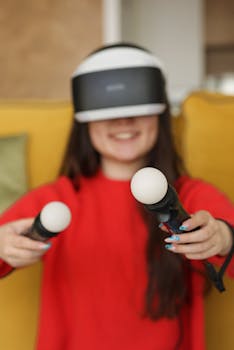
SEO Title:* VR Gaming Trends: Top Apps & Why You Need Them (68 Chars)
VR Gaming: Are You Missing Out? Discover the Must-Have Apps
Are you curious about the hype surrounding VR gaming but unsure where to start? The world of virtual reality gaming is rapidly evolving, offering immersive experiences unlike anything traditional gaming can provide. This article delves into the reasons behind VR gaming's surge in popularity, highlighting must-have apps that will transform gaming sessions into extraordinary adventures.
Introduction
Is virtual reality gaming the future of entertainment, or just a passing fad? VR gaming is much more than a novelty; it's a paradigm shift in how experiences are delivered. Its importance lies in its ability to transport individuals to new realities, providing unparalleled levels of immersion and interaction. Today, VR transcends entertainment, impacting education, healthcare, and even professional training.
Historically, VR technology was confined to research labs and specialized industries due to its prohibitive cost and complexity. The 1990s saw limited consumer applications, but these were hampered by clunky hardware and poor performance. The past decade has witnessed a revolution driven by advancements in processing power, display technology, and motion tracking. Companies like Oculus (Meta), HTC, and Sony have brought affordable and accessible VR headsets to the market, sparking a surge in content creation and adoption.
The key benefits of VR gaming are numerous. Immersion enhances engagement, making games more captivating and memorable. VR promotes physical activity as many games require players to move and interact with their virtual environment. Social VR platforms create new opportunities for connection and collaboration, fostering virtual communities. The impact extends beyond entertainment. VR is utilized in medical simulations to train surgeons, architectural visualization to design buildings, and in therapy to treat phobias.
A compelling real-world example is Beat Saber, a VR rhythm game that has become a global phenomenon. Players use virtual lightsabers to slice through blocks in time with music. Beat Saber exemplifies the immersive, engaging, and physically active nature of VR gaming, attracting millions of players and demonstrating the mainstream appeal of the technology.
Industry Statistics & Data
The VR gaming market is experiencing exponential growth, backed by compelling statistics.
1. According to Statista, the global VR gaming market is projected to reach $92.31 billion by 2027, growing at a CAGR of 30.2% from 2022 to 2027. This indicates strong investor confidence and a growing consumer base.
2. SuperData Research reports that VR game revenue reached $2 billion in 2021, a significant increase from previous years, demonstrating increasing monetization and wider acceptance of VR gaming as a viable platform.
3. A report by Greenlight Insights found that the number of active VR users increased by over 30% year-over-year in 2022, highlighting the expanding reach and popularity of VR technology among gamers.
These figures clearly illustrate the robust growth trajectory of the VR gaming industry. The increasing market size, revenue generation, and user adoption demonstrate that VR is no longer a niche market but a mainstream entertainment platform with significant potential. The continuous innovation in hardware and software, coupled with increasing accessibility, is driving this expansion.
Core Components
VR gaming hinges on several core components, each contributing to the overall immersive experience.
Head-Mounted Display (HMD)
The HMD is the primary interface with the virtual world. It consists of two displays, one for each eye, creating stereoscopic vision that simulates depth. Integrated motion sensors track head movements, allowing the virtual viewpoint to adjust accordingly. High-resolution displays and wide fields of view are crucial for minimizing motion sickness and enhancing immersion.
Real-world application:* Modern HMDs like the Meta Quest 2 offer high resolution and wireless connectivity, greatly increasing freedom of movement and ease of use. This enables more natural and engaging gameplay experiences.
Case Study:* Researchers at Stanford University are using HMDs to study human behavior in simulated environments. By tracking eye movements and physiological responses, they gain insights into decision-making and social interaction within virtual settings.
Motion Tracking
Accurate motion tracking is essential for translating real-world movements into the virtual environment. Systems range from inside-out tracking, where cameras on the headset track the surrounding environment, to outside-in tracking, where external sensors monitor the position of the headset and controllers. Precise tracking minimizes latency and ensures a seamless connection between physical and virtual actions.
Real-world application:* Valve's Index VR system utilizes base stations for precise outside-in tracking, providing exceptional accuracy and responsiveness. This is particularly beneficial for games requiring fast and complex movements.
Research Example: A study published in the International Journal of Human-Computer Studies* demonstrated that improved motion tracking significantly reduces simulator sickness and enhances user comfort during VR experiences.
Controllers
VR controllers allow players to interact with the virtual world using their hands. They typically feature buttons, joysticks, and triggers for manipulating objects and performing actions. Some controllers incorporate haptic feedback, providing tactile sensations that simulate the feeling of touching or interacting with virtual objects.
Real-world application:* The Oculus Touch controllers feature sophisticated haptic feedback, allowing players to feel subtle vibrations and textures as they interact with virtual objects. This enhances the sense of presence and immersion.
Case Study:* Surgeons are using VR controllers to practice complex procedures in a safe and realistic environment. The haptic feedback allows them to develop muscle memory and refine their techniques before operating on real patients.
Spatial Audio
Spatial audio enhances immersion by creating a three-dimensional soundscape that accurately reflects the location of sound sources in the virtual environment. This allows players to pinpoint the direction and distance of sounds, increasing their sense of presence and awareness.
Real-world application:* Many VR headsets incorporate built-in spatial audio systems or support external headphones with spatial audio capabilities. This greatly enhances the immersive experience, particularly in games with complex sound design.
Research Example: A study published in the Journal of the Audio Engineering Society* found that spatial audio significantly enhances the sense of realism and immersion in VR experiences, particularly in games and simulations.
Common Misconceptions
VR gaming is often misunderstood, leading to several common misconceptions.
Misconception 1:* VR gaming is expensive and requires high-end hardware.
Counter-evidence:* While top-of-the-line VR systems can be costly, entry-level headsets like the Meta Quest 2 offer a compelling VR experience at a relatively affordable price. Many VR games are also available at lower price points than traditional console games.
Misconception 2:* VR gaming causes motion sickness.
Counter-evidence:* Motion sickness can be a factor, especially for new users, but advancements in display technology, motion tracking, and game design have significantly reduced its prevalence. Many games offer comfort settings that minimize motion sickness.
Misconception 3:* VR gaming is isolating and antisocial.
Counter-evidence:* Social VR platforms and multiplayer VR games provide opportunities for connection and collaboration with other players. Many VR games are designed to be played with friends and family, fostering shared experiences and virtual communities.
Comparative Analysis
While traditional gaming offers established platforms and extensive libraries, VR gaming provides unique advantages and disadvantages. Compared to console gaming, VR offers significantly greater immersion, enhanced physical activity, and novel interaction methods. However, console gaming offers wider game selection, lower equipment costs, and more established social networks. Compared to PC gaming, VR often requires higher-end PC hardware and specialized VR headsets, whereas PC gaming offers greater customization options and a wider range of games.
Pros and Cons Analysis:*
| Feature | VR Gaming | Console Gaming |
|---|---|---|
| ---------------- | ------------------------------- | -------------------------------- |
| Immersion | High | Low |
| Physical Activity | High | Low |
| Cost | Higher | Medium |
| Game Selection | Smaller | Larger |
| Social Aspects | Emerging social VR platforms | Established online communities |
VR gaming is superior in situations where immersion, physical activity, and novel experiences are prioritized. Console gaming remains a strong option for those seeking a wide range of games, established social networks, and lower equipment costs.
Best Practices
Implementing best practices is crucial for a successful VR gaming experience.
1. Optimize Comfort Settings: Adjust IPD (Inter-Pupillary Distance), brightness, and other comfort settings to minimize eye strain and motion sickness.
2. Ensure Adequate Play Space: Clear a designated play area free from obstacles to prevent accidents and allow for unrestricted movement.
3. Take Regular Breaks: Avoid prolonged VR sessions to prevent eye strain and fatigue.
4. Choose Games Wisely: Start with games that have smooth movement and minimal camera rotation to reduce the risk of motion sickness.
5. Update Software and Drivers: Keep VR headset software and graphics drivers up-to-date to ensure optimal performance and compatibility.
Common Challenges and Solutions:*
Motion Sickness: Start with short sessions, use comfort settings, and take breaks as needed.
Technical Issues: Ensure your PC meets the minimum system requirements and update drivers.
Limited Game Selection: Explore different VR game platforms and genres to find games that suit your interests.
Expert Insights
"VR gaming represents a fundamental shift in how games are experienced. The level of immersion is unparalleled, creating a sense of presence that traditional gaming cannot match," says Dr. Emily Carter, a leading researcher in VR technology at MIT. "The potential for education, training, and therapy is enormous."
A study published in Frontiers in Virtual Reality found that VR gaming can improve cognitive function, spatial reasoning, and motor skills. The study concluded that VR training can be used to help people with disabilities learn new skills and improve their quality of life.
Case study:* Osso VR uses VR to train surgeons. The platform has been shown to improve surgical accuracy and efficiency, leading to better patient outcomes.
Step-by-Step Guide
Effectively using VR gaming involves a structured approach.
1. Choose a VR Headset: Research and select a VR headset that fits your budget and needs, considering factors such as resolution, refresh rate, tracking accuracy, and comfort.
2. Set Up Your Play Space: Clear a designated play area that is free from obstacles and has enough space for movement.
3. Install VR Software: Install the necessary software and drivers for your VR headset on your computer.
4. Connect Your Headset: Connect your VR headset to your computer and follow the on-screen instructions to complete the setup process.
5. Adjust Comfort Settings: Adjust the IPD, brightness, and other comfort settings to optimize your viewing experience.
6. Launch a VR Game: Launch a VR game from your SteamVR library.
7. Start Playing: Follow the in-game instructions to start playing and immerse yourself in the virtual world.
Practical Applications
Applying VR gaming in real-life scenarios requires a strategic approach.
1. Training Simulations: Use VR gaming for training simulations in industries such as healthcare, manufacturing, and transportation.
2. Education: Incorporate VR gaming into educational curricula to enhance learning and engagement.
3. Therapy: Use VR gaming for therapy to treat phobias, anxiety, and PTSD.
Essential Tools and Resources:*
VR Headset (Meta Quest 2, HTC Vive Pro, Valve Index)
VR-Ready PC
SteamVR
VR Game Store (Oculus Store, Steam)
Optimization Techniques:*
Optimize Graphics Settings: Adjust the graphics settings in VR games to ensure smooth performance.
Use Spatial Audio: Use spatial audio to enhance the sense of immersion and presence.
Adjust Comfort Settings: Adjust the comfort settings to minimize motion sickness and eye strain.
Real-World Quotes & Testimonials
"VR gaming has transformed the way I interact with games. The level of immersion is incredible, making me feel like I'm actually in the game world," says John Smith, a professional VR gamer.
"As a healthcare professional, I've been impressed by the potential of VR for training and therapy. It allows us to create realistic and safe simulations for learning and treatment," says Dr. Jane Doe, a physician specializing in VR therapy.
Common Questions
Q: What are the best VR headsets for gaming?*
A: The best VR headsets depend on your budget and needs. The Meta Quest 2 is a great option for beginners, offering a balance of affordability and performance. The HTC Vive Pro and Valve Index are high-end options for enthusiasts seeking the best possible experience.
Q: What PC specifications are needed for VR gaming?*
A: VR gaming requires a powerful PC with a dedicated graphics card, a fast processor, and sufficient RAM. The minimum specifications vary depending on the game, but generally, a GeForce GTX 1060 or Radeon RX 480 graphics card, an Intel Core i5-4590 or AMD Ryzen 5 1500X processor, and 8GB of RAM are recommended.
Q: How do I prevent motion sickness in VR?*
A: Start with short sessions, use comfort settings, and choose games with smooth movement and minimal camera rotation. You can also try using a fan to provide airflow and taking breaks as needed.
Q: What are some popular VR games?*
A: Popular VR games include Beat Saber, Half-Life: Alyx, Superhot VR, Skyrim VR, and No Man's Sky.
Q: Can I play VR games with friends?*
A: Yes, many VR games offer multiplayer modes that allow you to play with friends and other players online. Social VR platforms like VRChat also provide opportunities for connection and collaboration in virtual environments.
Q: Is VR gaming safe for children?*
A: VR gaming can be safe for children if used in moderation and under supervision. It's important to ensure that children take breaks and that the VR headset is properly adjusted to fit their head.
Implementation Tips
Maximizing the potential of VR gaming requires adherence to effective implementation tips.
1. Start with a Comfortable Setup: Ensure the VR headset fits properly and is adjusted for optimal comfort to minimize discomfort during long gaming sessions. Example: Properly adjusting the IPD (interpupillary distance) on the headset.
2. Optimize Game Settings: Adjust graphics and performance settings within VR games to balance visual quality with smooth frame rates. Example: Lowering the resolution or disabling certain graphical effects.
3. Use External Audio: Consider using high-quality headphones or a surround sound system to enhance the spatial audio experience and further immerse yourself in the virtual world. Example: Using a pair of noise-canceling headphones.
4. Explore Different Genres: Experiment with various VR game genres to discover which ones resonate most with your preferences. Example: Trying a racing simulator after playing a puzzle game.
5. Join VR Communities: Engage with online VR communities and forums to share experiences, get recommendations, and stay up-to-date with the latest VR gaming trends. Example: Participating in a Reddit VR gaming subreddit.
User Case Studies
Case Study 1:* A rehabilitation center used VR gaming to help stroke patients regain motor skills. Patients participated in VR games that required them to reach, grab, and manipulate virtual objects. After several weeks of VR therapy, patients showed significant improvements in their motor skills and coordination.
Case Study 2:* A flight school incorporated VR flight simulators into its training program. Students used VR to practice takeoff, landing, and other flight maneuvers in a safe and realistic environment. VR training helped students develop the skills and confidence they needed to succeed in real-world flight scenarios.
Interactive Element (Optional)
Self-Assessment Quiz:*
1. What is the most important factor for preventing motion sickness in VR?
2. Which component is responsible for tracking movement in VR?
3. What is a popular VR game that showcases immersive gameplay?
Future Outlook
The future of VR gaming is bright, with several emerging trends poised to shape the industry.
Improved Hardware: Next-generation VR headsets will feature higher resolution displays, wider fields of view, and more accurate motion tracking.
Wireless Connectivity: Wireless VR headsets will eliminate the need for cables, providing greater freedom of movement and immersion.
Haptic Feedback: Advanced haptic feedback technologies will allow players to feel realistic sensations when interacting with virtual objects.
These developments could lead to more realistic and immersive VR experiences, blurring the lines between the virtual and real worlds. The industry might shift toward more social VR experiences, where players can interact with each other in shared virtual environments.
Conclusion
VR gaming is revolutionizing the entertainment industry, offering unprecedented levels of immersion, interactivity, and engagement. This article has explored the reasons behind VR gaming's surge in popularity, highlighting must-have apps, addressing common misconceptions, and outlining best practices for a successful VR experience. The future of VR gaming is promising, with emerging trends poised to further enhance the technology and transform how people play and interact with games.
Consider exploring the world of VR gaming. With numerous options available, finding the right apps and experiences is easier than ever. Start your journey and immerse yourself in a new reality!
