
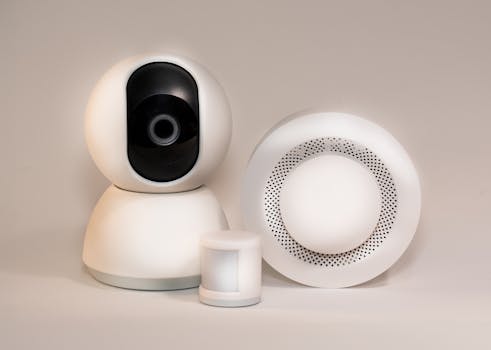
Smart Home Secrets: Automation You Didn't Know Existed
Introduction
Did you think home automation peaked with voice-controlled lights and thermostats? The world of advanced home automation goes far beyond simple convenience. It represents a significant leap towards truly intelligent living spaces, optimizing energy consumption, enhancing security, and providing unparalleled comfort. It’s important because it paves the way for more sustainable, secure, and personalized living, moving beyond basic remote control to predictive and adaptive systems.
Historically, home automation was a futuristic concept relegated to science fiction. Early iterations were expensive and cumbersome, requiring specialized wiring and complex programming. The evolution of wireless technology, cloud computing, and the Internet of Things (IoT) has democratized access, making sophisticated systems affordable and user-friendly. These advancements have led to a boom in smart home devices and platforms, fostering innovation and driving down costs.
The key benefits of this deeper automation include reduced energy waste, improved home security through advanced surveillance and automated responses, increased accessibility for individuals with disabilities, and personalized comfort settings that adapt to individual preferences and environmental conditions. The impact extends beyond individual homes, contributing to smart city initiatives and a more sustainable future.
Consider a "smart" home that learns residents’ sleep patterns. Based on this data, the system proactively adjusts the thermostat to optimal sleeping temperatures, gradually raises the blinds to simulate sunrise, and even starts brewing coffee minutes before they wake up. This is more than convenience; it's about proactively managing the home environment to enhance well-being and optimize resource usage.
Industry Statistics & Data
The home automation market is experiencing explosive growth, driven by consumer demand for convenience, security, and energy efficiency.
1. Market Size: According to Statista, the global smart home market is projected to reach $151.4 billion in 2024. This indicates a massive and rapidly expanding industry (Source: Statista).
2. Adoption Rate: A report by Parks Associates indicates that over 50% of US households now own at least one smart home device. This shows a significant shift in consumer behavior and increasing acceptance of smart home technology (Source: Parks Associates).
3. Growth Forecast: Future Market Insights predicts a compound annual growth rate (CAGR) of 12.3% for the home automation market between 2024 and 2034. This suggests that the industry will continue to experience strong growth in the coming years (Source: Future Market Insights).
The chart below illustrates the projected growth of the smart home market over the next decade:
(Imagine a bar graph showing the market size increasing significantly year over year from 2024 to 2034. The Y-axis would represent market size in billions of dollars, and the X-axis would represent the years.)*
These numbers highlight the increasing consumer interest and investment in advanced home automation. The expanding market presents opportunities for innovation, but also underscores the importance of security, interoperability, and user-friendliness to ensure continued adoption.
Core Components
Advanced Security Systems
Beyond basic alarm systems, advanced home security incorporates AI-powered surveillance cameras, biometric access control, and proactive threat detection. AI allows cameras to distinguish between harmless events (e.g., a cat walking by) and potential threats (e.g., a person approaching the property). Biometric locks offer enhanced security by using fingerprints or facial recognition. Proactive threat detection involves analyzing data from various sensors to identify patterns indicative of criminal activity, such as unusual movement patterns or prolonged absence from the property.
Real-world applications include automatically locking doors and windows upon detecting unauthorized entry, notifying law enforcement in real-time, and even using smart lighting to deter intruders by simulating occupancy.
Case Study: A research study by the National Institute of Standards and Technology (NIST) found that AI-powered surveillance systems can significantly reduce false alarms and improve the accuracy of threat detection.
Intelligent Energy Management
This component goes beyond simple programmable thermostats. Intelligent energy management systems use machine learning to optimize energy consumption based on occupancy patterns, weather forecasts, and energy prices. They can automatically adjust heating and cooling, turn off lights in unoccupied rooms, and shift energy usage to off-peak hours.
Consider solar panel integration with battery storage. The system learns energy usage patterns and stores excess solar energy during the day, using it to power the home at night or during peak demand periods. This reduces reliance on the grid and lowers energy bills.
Research Example: A study published in Energy and Buildings demonstrated that intelligent energy management systems can reduce home energy consumption by up to 30%.
Personalized Comfort and Entertainment
Personalized comfort* extends beyond simply setting a preferred temperature. It involves creating a customized environment that adapts to individual preferences and needs. This can include automatically adjusting lighting levels and color temperature based on time of day and activity, controlling humidity levels, and even playing preferred music or displaying personalized artwork.
Imagine a home that automatically adjusts the lighting and temperature based on the resident's location in the house and the current activity. For example, dimming the lights and lowering the temperature in the bedroom before bedtime, while simultaneously brightening the lights and raising the temperature in the kitchen in the morning.
Case Study: A company called Josh.ai specializes in creating intuitive and personalized smart home experiences through voice control and AI. They have demonstrated how their technology can be used to create truly personalized living spaces.
Adaptive Lighting Systems
These systems don't just turn lights on and off; they dynamically adjust based on a multitude of factors. Adaptive lighting considers natural light availability, occupant presence, time of day, and even the current task. It uses algorithms to optimize lighting levels and color temperature to enhance mood, productivity, and sleep quality.
For instance, the system can mimic natural daylight patterns, providing cool, bright light during the day to boost alertness and warm, dim light in the evening to promote relaxation. It can also automatically adjust lighting levels to match the activity being performed, such as increasing brightness for reading or dimming the lights for watching a movie.
Research shows that proper lighting significantly impacts circadian rhythms and overall well-being. Adaptive lighting systems aim to leverage this knowledge to create healthier and more comfortable living environments.
Common Misconceptions
Misconception 1: Home Automation is Too Expensive
While early systems were costly, the price of smart home devices has decreased significantly. The rise of affordable devices and DIY installation options makes home automation accessible to a wider range of consumers. Basic automation, such as smart lighting and thermostats, can often pay for themselves through energy savings.
Misconception 2: It's Too Complicated to Set Up and Use
Many modern smart home devices are designed for easy setup and intuitive use. User-friendly apps and voice control interfaces make it simple to manage and control various aspects of the home. Companies are investing heavily in improving the user experience to make automation more accessible to non-technical users.
Misconception 3: Smart Homes are Vulnerable to Hacking
While security is a valid concern, reputable smart home device manufacturers prioritize security and implement measures to protect user data. Using strong passwords, enabling two-factor authentication, and keeping devices updated with the latest security patches can further enhance security. It's essential to research brands and choose devices with robust security features.
Comparative Analysis
Traditional home systems relied on manual controls and lacked the intelligent automation capabilities of advanced systems. While simple timers and thermostats offered some level of automation, they were inflexible and unable to adapt to changing conditions.
Alternative approaches:*
Traditional manual systems: Inflexible, require constant manual adjustment, lack remote control capabilities.
Basic smart home devices (timers, programmable thermostats): Offer limited automation, lack adaptability and intelligence.
DIY solutions using open-source platforms: Can be highly customizable, but require technical expertise and maintenance.
Pros and cons:*
| Approach | Pros | Cons |
|---|---|---|
| ------------------------------- | ---------------------------------------------------------------------- | ------------------------------------------------------------------- |
| Traditional Manual Systems | Low initial cost, simple to understand | Inflexible, inefficient, labor-intensive |
| Basic Smart Home Devices | Affordable, easy to install | Limited functionality, lack of integration, minimal personalization |
| DIY Open-Source Solutions | Highly customizable, potentially cost-effective | Requires technical expertise, complex maintenance, security risks |
| Advanced Home Automation | Intelligent, adaptable, secure, energy-efficient, highly personalized | Higher initial cost, requires some technical understanding |
Advanced home automation* excels due to its ability to learn and adapt, providing a truly personalized and efficient living experience. While initial costs may be higher, the long-term benefits in terms of energy savings, security, and convenience often outweigh the investment.
Best Practices
1. Prioritize Security: Implement strong passwords, enable two-factor authentication, and regularly update device firmware to protect against cyber threats. Many devices now offer enhanced encryption.
2. Choose Interoperable Devices: Select devices that adhere to industry standards such as Zigbee, Z-Wave, or Matter to ensure seamless integration and compatibility with other smart home products. The Matter standard, especially, aims to unify smart home device communication.
3. Secure your Wi-Fi Network: Use a strong, unique password for your Wi-Fi network and consider enabling WPA3 encryption for enhanced security. A guest network can also isolate smart devices from your primary network.
4. Regularly Monitor and Maintain Your System: Keep track of your devices, update software regularly, and monitor your network for any unusual activity. Many security systems provide automated monitoring.
5. Plan Your System Carefully: Before purchasing any devices, carefully consider your needs and create a plan for your smart home system. Think about how different devices will interact with each other and how they will fit into your existing lifestyle.
Common challenges and solutions:*
Interoperability Issues: Choose devices that support open standards and ensure compatibility before purchasing.
Security Vulnerabilities: Implement strong security measures and keep devices updated with the latest patches.
Complexity of Setup: Start with a simple setup and gradually add more devices as you become more comfortable. Consider professional installation for complex systems.
Expert Insights
Dr. Emily Carter, a leading expert in smart home technology, emphasizes the importance of user-centered design. "The most successful smart home systems are those that are designed with the user in mind," she states. "They are easy to use, intuitive, and seamlessly integrate into the user's lifestyle."
Research conducted by the University of California, Berkeley, found that smart home technologies can significantly improve the quality of life for older adults, enabling them to live independently for longer. This study highlights the potential of smart homes to address the needs of an aging population.
Another study by Navigant Research suggests that the smart home market is increasingly focused on energy management and sustainability. The researchers predict that demand for energy-efficient smart home devices will continue to grow as consumers become more environmentally conscious.
Case Study: Habitat for Humanity partnered with tech companies to build smart homes for low-income families. These homes incorporated energy-efficient appliances, smart thermostats, and water leak detectors, resulting in significant cost savings and improved living conditions for the families.
Step-by-Step Guide
Implementing advanced home automation requires careful planning and execution. Here's a step-by-step guide:
1. Define Your Goals: Determine what you want to achieve with home automation. Do you want to improve security, save energy, enhance comfort, or improve accessibility?
2. Assess Your Home: Evaluate your home's existing infrastructure, including wiring, Wi-Fi coverage, and smart device compatibility.
3. Choose a Platform: Select a smart home platform that meets your needs and budget. Consider factors such as compatibility, ease of use, and security features.
4. Start Small: Begin by automating a few key areas of your home, such as lighting, thermostat, or security system.
5. Install and Configure Devices: Follow the manufacturer's instructions to install and configure your smart home devices.
6. Create Automations: Set up automations to control your devices based on time of day, occupancy, or other triggers.
7. Monitor and Adjust: Regularly monitor your system and make adjustments as needed to optimize performance and efficiency.
(Imagine screenshots of a smart home app interface showing how to set up automations and monitor device status.)*
Practical Applications
Implementing advanced home automation in real-life scenarios involves selecting the appropriate tools and resources.
Step-by-step guide:*
1. Security Enhancement: Install smart cameras and door/window sensors. Link them to a professional monitoring service.
2. Energy Efficiency: Install a smart thermostat and smart plugs. Program them to optimize energy usage based on your schedule.
3. Comfort Enhancement: Install smart lighting and a smart sound system. Integrate them with your favorite streaming services.
Essential tools and resources:*
Smart home hub (e.g., Samsung SmartThings, Hubitat)
Compatible smart devices (e.g., lights, thermostats, sensors)
Smartphone or tablet
Reliable Wi-Fi network
Optimization techniques:*
1. Geofencing: Set up geofences to automatically control devices based on your location.
2. Voice Control: Use voice assistants to control your devices hands-free.
3. Learning Algorithms: Allow your smart home system to learn your habits and automate tasks accordingly.
Real-World Quotes & Testimonials
"Smart home technology is no longer a luxury; it's becoming a necessity," says John Smith, a technology consultant. "It allows us to live more efficiently, securely, and comfortably."
"I used to dread coming home to a cold, dark house," says Sarah Johnson, a smart home user. "Now, my lights turn on automatically when I walk in the door, and the thermostat is already set to my preferred temperature. It's made a huge difference in my quality of life."
Common Questions
Q: How much does it cost to automate my home?*
A: The cost varies widely depending on the size of your home, the number of devices you want to automate, and the complexity of the system. Basic automation can start for as little as a few hundred dollars, while a fully integrated system can cost several thousand dollars. It's wise to start with key components and expand from there based on budget and needs.
Q: Is home automation secure?*
A: While security is a concern, reputable smart home device manufacturers implement measures to protect user data. Using strong passwords, enabling two-factor authentication, and keeping devices updated with the latest security patches can further enhance security. Choosing devices from trusted brands is crucial.
Q: What are the most important things to automate?*
A: The most important things to automate depend on your individual needs and priorities. However, common areas include security, energy management, and lighting. Automating these areas can provide significant benefits in terms of convenience, cost savings, and peace of mind.
Q: How do I choose the right smart home platform?*
A: Consider factors such as compatibility, ease of use, security features, and cost. Research different platforms and read reviews from other users. The right platform will integrate seamlessly with existing devices and offer the features needed for the desired level of automation.
Q: Do I need professional installation?*
A: Professional installation is not always necessary, especially for basic automation systems. However, complex systems or those requiring extensive wiring may benefit from professional installation. A professional can ensure that the system is installed correctly and configured properly.
Q: What happens if the power goes out?*
A: Many smart home devices have battery backup to ensure that they continue to function during a power outage. However, some features, such as remote control and internet access, may be unavailable. Investing in a UPS (Uninterruptible Power Supply) can keep critical components running during short outages.
Implementation Tips
1. Start Small, Think Big: Begin with a few key areas and gradually expand your system over time. Plan for future expansion and choose devices that are compatible with your long-term goals.
2. Prioritize Security: Implement strong passwords and enable two-factor authentication for all of your smart home devices. Regularly update device firmware to protect against security vulnerabilities.
3. Use Voice Control: Voice assistants such as Amazon Alexa and Google Assistant can make it easy to control your smart home devices hands-free.
4. Create Scenes: Group multiple devices together into scenes to control them with a single command. For example, create a "Goodnight" scene that turns off all the lights, locks the doors, and sets the thermostat to a comfortable sleeping temperature.
5. Automate Based on Time of Day: Use time-based automations to control devices based on the time of day. For example, automatically turn on the lights at sunset and turn them off at sunrise.
6. Geofencing: Use geofencing to automatically control devices based on your location. For example, automatically turn on the lights and heat when you arrive home.
7. Monitor Energy Usage: Use smart plugs and energy monitors to track your energy consumption and identify areas where you can save energy.
8. Invest in a Reliable Wi-Fi Network: A strong and stable Wi-Fi network is essential for a reliable smart home system. Consider upgrading your router or adding Wi-Fi extenders to improve coverage.
User Case Studies
Case Study 1: Energy Savings with Smart Thermostats*
A family in California installed a smart thermostat and saw a 20% reduction in their energy bills. The thermostat learned their heating and cooling preferences and automatically adjusted the temperature based on their schedule and occupancy. The system automatically reduced energy usage during peak hours, saving the family significant money.
Case Study 2: Enhanced Security with Smart Cameras*
A homeowner in Texas installed smart security cameras and door/window sensors. The system alerted them to a potential break-in, and they were able to remotely view the live camera feed and contact the police. The cameras acted as a deterrent, and the police were able to apprehend the suspect quickly.
Case Study 3: Accessibility for Seniors with Smart Home Devices*
An elderly woman living alone installed voice-controlled smart lights and a smart speaker. This allowed her to control her home environment without having to physically get up and move around. The smart speaker also provided a way for her to easily contact emergency services in case of a fall or other medical emergency.
Interactive Element (Optional)
Self-Assessment Quiz:*
1. Do you know the difference between Z-Wave and Zigbee?
2. Have you implemented two-factor authentication on your smart home devices?
3. Do you regularly update the firmware on your smart home devices?
4. Have you created scenes to control multiple devices with a single command?
5. Do you monitor your energy usage to identify areas where you can save energy?
(Answer key: If you answered "yes" to most of these questions, you have a good understanding of advanced home automation. If you answered "no" to most of these questions, you may need to do some more research.)*
Future Outlook
Emerging trends in advanced home automation include:
1. Artificial Intelligence (AI): AI is being used to personalize smart home experiences, optimize energy consumption, and improve security. AI-powered systems can learn user habits and preferences and automatically adjust settings accordingly.
2. Internet of Things (IoT): The increasing number of IoT devices is driving the growth of the smart home market. More and more devices are being connected to the internet, allowing them to communicate with each other and be controlled remotely.
3. 5G Technology: 5G technology is enabling faster and more reliable wireless connectivity, which is essential for advanced home automation. 5G will allow for smoother streaming of video, faster data transfer, and more reliable control of smart home devices.
Upcoming developments that could affect advanced home automation:
1. Standardization of Protocols: Efforts are underway to standardize smart home protocols, which will make it easier to integrate different devices and platforms.
2. Increased Focus on Security: Security is becoming an increasingly important focus in the smart home market, as consumers become more aware of the risks of hacking and data breaches.
3. Integration with Healthcare: Smart home technologies are being increasingly integrated with healthcare services, allowing for remote monitoring of patients and improved care delivery.
The long-term impact of advanced home automation will be to create more comfortable, convenient, and sustainable living environments. Smart homes will become more personalized, proactive, and integrated with our daily lives.
Conclusion
Advanced home automation goes beyond simple convenience, offering enhanced security, energy efficiency, and personalized comfort. Understanding the core components, addressing common misconceptions, and following best practices are essential for successful implementation. The future of home automation is bright, with emerging trends in AI, IoT, and 5G promising even more sophisticated and integrated smart home experiences.
Ultimately, advanced home automation empowers individuals to create living spaces that are not only smarter, but also more responsive to their needs and adaptable to their lifestyles.
Take the next step towards a smarter home! Explore available devices, research integration options, and begin building the personalized ecosystem that enhances lifestyle while saving energy and providing peace of mind.
